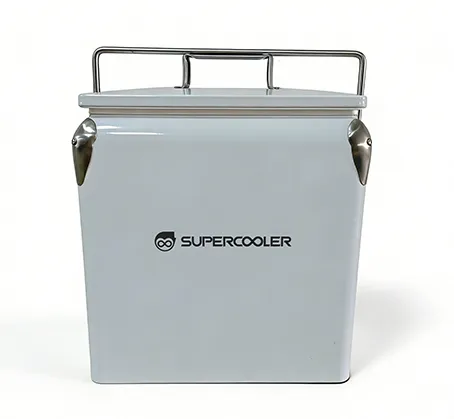
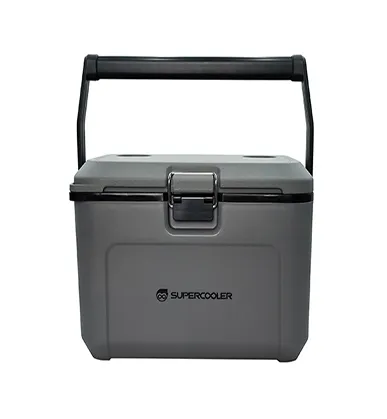
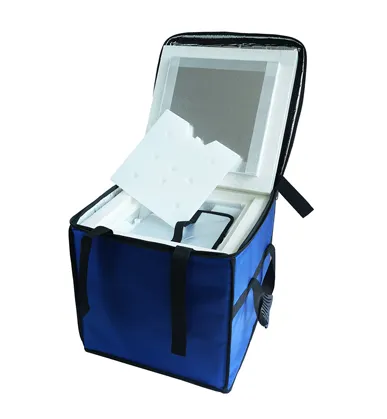
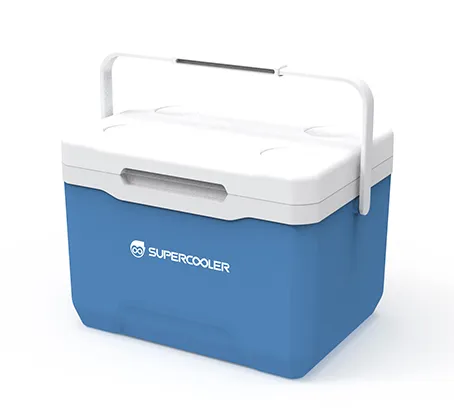
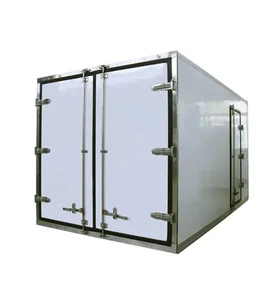
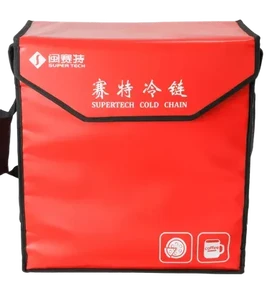
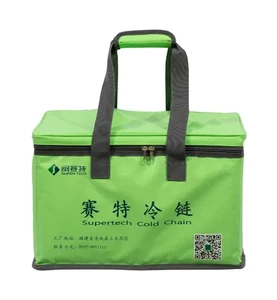
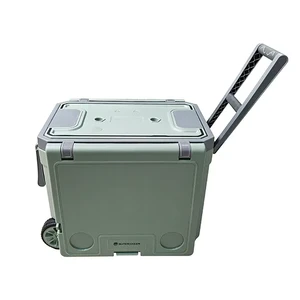
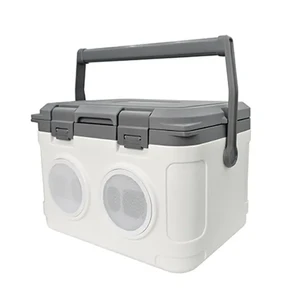
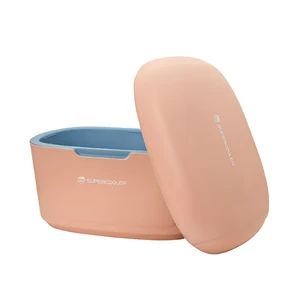
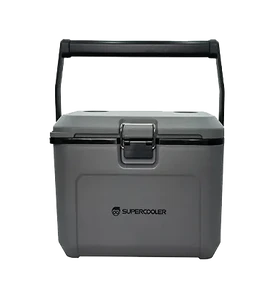
In 2026, cold-chain shippers are being squeezed from both sides. Stricter temperature-excursion accountability — driven by food safety regulations and pharmaceutical compliance requirements — has raised the cost of a failed shipment. At the same time, longer routes, last-mile delays, and rising logistics labor costs have increased the pressure on every line item in the cold-chain budget. The result is that choosing the right insulated boxeshas moved from a packaging detail to a strategic decision that directly affects spoilage rates, customer penalty exposure, repeat shipping cost, and the sustainability metrics that procurement teams are now required to report.
The four mainstream insulation technologies — EPS, PU, VIP, and EPP — do not compete on the same terms. An EPP cooler box built for urban reuse cycles is not competing with a VIP cold chain container built for pharmaceutical temperature stability. Each technology has a lane where its economics are strongest, and selecting the wrong technology for the lane produces costs that no amount of operational optimization can recover. This guide compares all four technologies using STCCL's product lineup as the reference point, with the thermal conductivity data, hold time specifications, and application positioning that give buyers an objective basis for selection.
Four Types of Insulated Shipping Boxes: What Each Technology Is Actually Best At
The starting point for any insulated box selection is understanding what each technology optimizes for — because the technology that wins on one dimension typically trades off on another.
EPS: Lowest Cost for One-Way, Cost-Driven Lanes
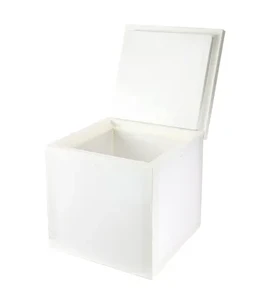
Expanded polystyrene is the most widely used insulation material in disposable cold-chain packaging. Its advantages are low material cost, light weight, and adequate insulation performance for short to medium duration shipments at ambient temperatures that do not require extended hold times. Its limitations are fragility — EPS breaks under impact and cannot be reused reliably — and the disposal cost and environmental profile that make it increasingly problematic in markets with single-use packaging regulations.
EPS is the correct choice when the shipment is one-way, the route duration is within the material's hold time capability, the product value does not justify a premium insulation investment, and the recovery logistics for a reusable system do not exist. Mass-market seafood, ambient-temperature produce, and low-value perishables on short domestic routes are the applications where EPS economics are strongest.
PU: Balanced Performance for Medium and Long-Haul Food Cold Chain
Polyurethane foam provides significantly better insulation performance than EPS at the same thickness — STCCL's PU-VIP material data lists PU thermal conductivity at ≤23 mW/m·k, compared to EPS which typically ranges from 33 to 40 mW/m·k. PU also provides greater structural rigidity, which reduces the damage rate on longer routes where the box is handled multiple times. The combination of better insulation and better structural performance makes PU the standard choice for medium and long-haul food cold chain applications where EPS performance is insufficient but the payload value does not justify VIP-level investment.
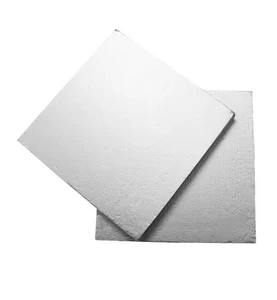
PU is commonly used in composite structures — combined with VIP panels to boost performance in specific wall sections — which allows the insulation system to be tuned to the route's thermal requirements without the full cost of an all-VIP construction.
VIP: Maximum Insulation for High-Value, Temperature-Critical Payloads
Vacuum insulated panels achieve thermal conductivity as low as ≤2.5 mW/m·k — approximately one-ninth of PU and one-fifteenth of EPS. This performance advantage translates directly into two operational benefits: longer hold times at the same wall thickness, or thinner walls at the same hold time. STCCL states that VIP insulation can provide 5 to 10 times better insulation than traditional materials at the same thickness — which means a VIP box with 25mm walls can outperform an EPS box with 100mm walls on hold time, while occupying significantly less space in the shipment.
The thinner wall profile increases the payload-to-outer-dimension ratio — more product fits in the same outer box size — which reduces the per-unit shipping cost for high-value payloads where freight cost is calculated on dimensional weight. VIP is the correct choice for pharmaceutical products, vaccines, clinical materials, and any high-value payload where a temperature excursion has a cost that exceeds the premium of the VIP system.
EPP Cooler Box: Durability and Reusability for Urban Distribution Cycles
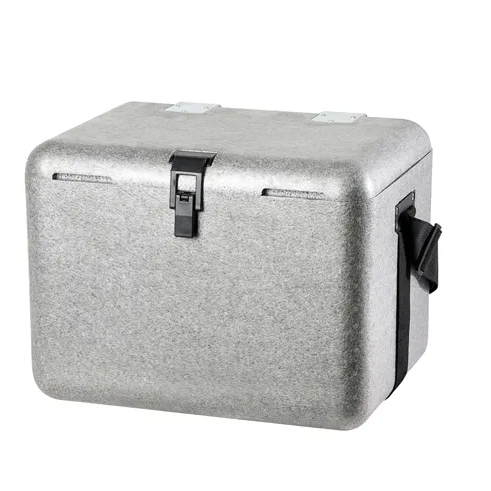
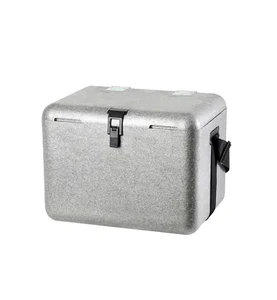
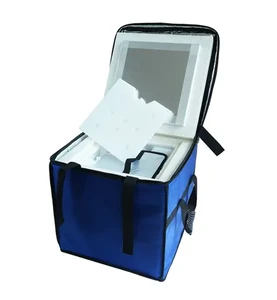
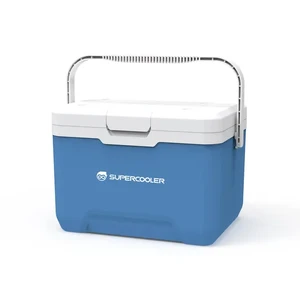
Expanded polypropylene provides impact resistance and structural durability that EPS and standard PU foam cannot match. An EPP cooler box survives the repeated drops, compressions, and handling events of a multi-trip urban distribution cycle without the cracking and deformation that make EPS single-use by necessity. STCCL's EPP cooler box combines EPP with VIP panels — delivering the impact resistance of EPP with the thermal performance of VIP — and is positioned for pharmaceutical distribution, fresh produce, and food transport applications where the box makes multiple trips per week.
The economics of an EPP cooler box are evaluated on a cost-per-trip basis rather than a cost-per-unit basis. A box that costs significantly more than an EPS equivalent but makes 50 trips before replacement has a lower cost per trip than an EPS box that is discarded after one use — and the reverse logistics infrastructure required to support the reuse program is the operational investment that determines whether the EPP economics are achievable in a specific distribution network.
How Insulated Boxes Work and Why VIP Changes the Economics
Understanding the heat transfer mechanism that insulated boxes are designed to resist clarifies why thermal conductivity is the specification that most directly predicts performance — and why the difference between 23 mW/m·k and 2.5 mW/m·k is not a marginal improvement but a fundamental change in what is possible at a given wall thickness.
The Heat Transfer Mechanism
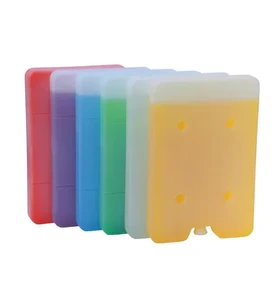
Heat flows into a cold-chain shipment through three mechanisms: conduction through the walls of the box, convection through any air gaps or openings, and radiation across the interior space. Insulation materials slow conduction by trapping air or creating a vacuum in the insulation layer — the lower the thermal conductivity of the insulation material, the slower the heat flow through the wall at a given thickness. The coolant inside the box — ice packs, phase change material, or dry ice — absorbs the heat that does flow through the walls, maintaining the internal temperature until the coolant is exhausted.
The hold time of an insulated box is determined by the rate of heat flow through the walls and the heat absorption capacity of the coolant. Reducing the rate of heat flow — by using a lower thermal conductivity insulation material or by increasing the wall thickness — extends the hold time for a given coolant load, or allows the coolant load to be reduced for a given hold time.
Why VIP Changes the Economics
The vacuum in a VIP panel eliminates the air molecules that conduct and convect heat through a conventional foam insulation layer. The result is a thermal conductivity of ≤2.5 mW/m·k — compared to ≤23 mW/m·k for PU foam — which means that a VIP wall conducts heat at less than one-ninth the rate of a PU wall of the same thickness.
This performance difference has direct economic implications. A VIP box can achieve the same hold time as a PU box with walls that are approximately one-ninth as thick — which means the outer dimensions of the box can be significantly smaller for the same internal volume, reducing dimensional weight freight charges. Or the VIP box can achieve a much longer hold time than a PU box at the same wall thickness — which means the coolant load can be reduced, reducing the weight and cost of the coolant per shipment.
STCCL's VIP Implementation Across the Product Range
| Product | Insulation Construction | Positioning |
|---|
| Integrated Vacuum Insulated Box | PU-coated VIP foam integrated molding | Reusable, high performance-to-cost ratio |
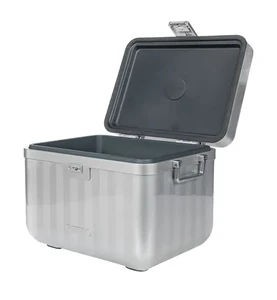
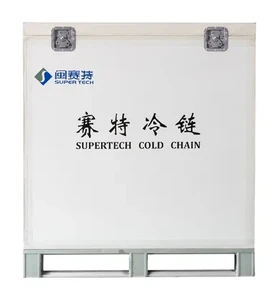
| H26 Vacuum Insulated Box | VIP + PU composite insulation layer | 72–120 hour hold time for pharmaceutical and food applications |
| Hollow Insulated Box | PU-VIP core + waterproof Oxford cloth outer bag | City delivery with standardized ice pack packout |
| EPP Cooler Box | EPP + VIP composite | Multi-trip durability with VIP thermal performance |
Key Specifications That Drive ROI: What to Compare Before You Buy
Selecting insulated boxes based on the correct performance specifications — rather than on unit price alone — is the decision that determines whether the system delivers the spoilage reduction and temperature compliance that justifies the investment.
Comparative Specification Table
| Specification | EPS | PU | VIP (H26 / Integrated) | EPP Cooler Box |
|---|
| Thermal conductivity | ~33–40 mW/m·k | ≤23 mW/m·k | ≤2.5 mW/m·k | EPP + VIP composite |
| Typical hold time | Route-dependent, shorter | Route-dependent, longer than EPS | 72–120 hours (STCCL H26 and integrated models) | 48–72 hours (model-dependent) |
| Wall thickness for equivalent performance | Thickest | Moderate | Thinnest | Moderate with VIP enhancement |
| Reusability | Single-use | Limited reuse | Reusable (integrated model) | Multi-trip, impact-resistant |
| Impact resistance | Low — brittle | Moderate | Moderate | High — EPP absorbs impact |
| Cost per unit | Lowest | Moderate | Highest | Moderate to high, lowest cost per trip in reuse programs |
| Payload-to-outer-dimension ratio | Lowest | Moderate | Highest — thin walls maximize internal volume | Moderate |
Hold Time and Packout Standardization
STCCL's H26 Vacuum Insulated Box and Integrated Vacuum Insulated Box specify hold times of 72 to 120 hours — the performance window that covers most international pharmaceutical distribution routes and extended last-mile scenarios where delivery delays are a known risk. The EPP cooler box range includes models with 48 to 72 hour hold times, with internal dimensions and standard ice pack counts specified per model — which supports packout standardization across a distribution network where consistent coolant placement is required for repeatable temperature performance.
The Hollow Insulated Box specifies internal volume in liters and standard ice pack count per model, which allows the packout SOP to be defined precisely — the number of ice packs, their placement relative to the product, and the expected hold time at a defined ambient temperature — rather than being left to operator judgment at the packing station.
Application Match: Best Insulated Boxes for Food vs High-Value Pharma
The correct insulation technology for a specific application is determined by the intersection of route economics, payload value, temperature requirement, and reuse capability. The following scenarios represent the highest-ROI use cases for each technology.
EPS: One-Way, Cost-Driven Lanes
EPS is the correct choice for mass-market perishables on short domestic routes where the product value is low, the route duration is within EPS hold time capability, and the disposal of single-use packaging is not a regulatory or sustainability constraint. The economics are straightforward: the lowest unit cost produces the lowest packaging cost per shipment when the box is used once and discarded.
PU: Mainstream Food Cold Chain on Medium and Long Routes
PU foam insulated boxes are the standard choice for fresh produce, meal kits, dairy, and other mainstream food cold chain applications on medium and long routes where EPS performance is insufficient. The thermal conductivity advantage over EPS — ≤23 mW/m·k versus 33 to 40 mW/m·k — translates into longer hold times or thinner walls at the same hold time, and the structural rigidity of PU reduces the damage rate on routes with multiple handling events.
VIP: Pharmaceutical, Vaccines, and Clinical Materials
STCCL explicitly positions its VIP insulated boxes for pharmaceutical applications where temperature precision and long-duration stability are the primary requirements. The 72 to 120 hour hold time of the H26 and Integrated Vacuum Insulated Box models covers the extended route durations that international pharmaceutical distribution requires, and the thin wall profile of VIP construction maximizes the payload volume within the outer dimensions that freight cost calculations are based on.
EPP Cooler Box: Urban Distribution and Multi-Drop Routes
The EPP cooler box is the correct choice for urban food delivery, medical sample transport, and multi-drop distribution routes where the box makes multiple trips per week and impact resistance is a practical requirement. The combination of EPP's impact absorption and VIP's thermal performance in STCCL's EPP cooler box delivers the durability and temperature stability that a reuse program requires — and the cost-per-trip economics improve with each additional trip the box completes before replacement.
Packout, Maintenance, and TCO: Protecting Profit After You Buy the Insulated Boxes
Packout SOP: The Step That Determines Whether the Specification Is Achieved
The hold time specification of an insulated box is achieved only when the packout is executed correctly. Pre-conditioning the product and coolant to the target temperature before packing — not relying on the coolant to bring warm product down to temperature inside the box — is the single most important packout practice for achieving the specified hold time. Standardizing the ice pack or PCM placement according to the model's specified configuration ensures that the thermal mass is distributed correctly around the product, not concentrated in one area.
STCCL's Hollow Insulated Box specifies the standard ice pack count per model, which provides the basis for a standardized packout SOP. Define the packout procedure — product placement, coolant placement, lid closure sequence — and train packing staff to follow it consistently. Packout variability is the most common cause of temperature excursions in operations where the insulated box specification is adequate but the execution is inconsistent.
Maintenance and Lifecycle for Reusable Systems
Reusable EPP and VIP composite systems require a maintenance and tracking program to deliver their cost-per-trip economics. After each trip, inspect the box for impact damage that could compromise the VIP panel integrity — a punctured VIP panel loses its vacuum and reverts to the thermal conductivity of the foam fill, which significantly reduces hold time. Clean the interior and exterior according to the food safety or pharmaceutical hygiene requirements of the application. Track each box through its trip count to identify units that are approaching end of service life before they fail in the field.
TCO Framework
| Cost Item | EPS | PU | VIP | EPP Cooler Box |
|---|
| Unit packaging cost | Lowest | Moderate | Highest | Moderate to high |
| Cost per trip (reuse) | Equal to unit cost — no reuse | Limited reuse value | Amortized over reuse cycles | Lowest in reuse programs |
| Coolant cost per shipment | Higher — thicker walls require more coolant | Moderate | Lower — thin walls reduce heat load | Moderate with VIP enhancement |
| Spoilage and excursion cost | Higher on longer routes | Lower than EPS | Lowest — longest hold time | Low in reuse programs |
| Freight cost (dimensional weight) | Higher — thick walls increase outer dimensions | Moderate | Lower — thin walls maximize payload ratio | Moderate |
| Disposal and sustainability cost | Higher — single-use, regulatory risk | Moderate | Lower — reusable | Lowest — multi-trip reuse |
For a pharmaceutical shipper sending 500 shipments per month on 96-hour routes with a product value of $500 per shipment and a 2% excursion rate using PU boxes, the monthly excursion cost is $5,000. Switching to VIP boxes that reduce the excursion rate to 0.2% avoids $4,500 per month in excursion cost — before accounting for the freight cost reduction from thinner walls and the coolant cost reduction from lower heat load. Against the capital cost premium of VIP over PU, the payback period is typically less than six months for high-value pharmaceutical routes.
Conclusion
There is no single best insulation technology — only the best match to the lane, the payload value, and the reuse capability of the distribution network. EPS wins on one-way cost for short routes with low-value perishables. PU wins on balanced performance for mainstream food cold chain on medium and long routes. VIP wins on maximum protection and thin-wall efficiency for high-value pharmaceutical and vaccine shipments. An EPP cooler box wins on cost-per-trip durability for urban distribution programs where the reuse infrastructure exists to capture the economics.
The thermal conductivity data — PU at ≤23 mW/m·k and VIP at ≤2.5 mW/m·k — is the specification that makes this comparison objective rather than subjective. Match the technology to the route, specify the hold time and packout SOP correctly, and insulated packaging becomes a measurable profit lever rather than a compliance checkbox.
Get Your Recommended Configuration and Quote
Visit the insulated boxes product page to review the full range, then submit the following details to receive a matched configuration and quotation:
| Parameter | What to Provide |
|---|
| Work condition | Product type (seafood, meal kits, pharma), route and duration, ambient temperature range, handoff and last-mile delay risk |
| Quantity | Shipments per week, peak season volume, reuse cycles per month if reusable |
| Size and spec | Payload dimensions and weight, target internal volume, outer size constraints, coolant type (gel packs, PCM, or dry ice) |
| Target metrics | Required hold time in hours, temperature band (2–8°C, frozen, or other), maximum allowable excursion rate, damage rate target |
| Current problem | Spoilage, temperature excursions, coolant cost too high, box breakage, return logistics complexity |
FAQ
1. What are insulated boxes?
Insulated boxes are temperature-controlled shipping containers that reduce the rate of heat transfer between the interior of the box and the ambient environment, allowing the contents to remain within a required temperature range for a defined period during transport. The insulation material supplied by a thermal insulation materials manufacturer — such as EPS, PU foam, VIP panels, or EPP composite — slows heat flow through the walls, while a coolant inside the box — ice packs, phase change material, or dry ice — absorbs the heat that does flow through, maintaining the internal temperature until the coolant is exhausted. The hold time of the system is determined by the thermal conductivity of the insulation material, the wall thickness, the coolant capacity, and the ambient temperature during the shipment. Insulated boxes are used across food cold chain, pharmaceutical distribution, medical sample transport, and any application where maintaining a defined temperature range during transit is a quality or compliance requirement.
<p style="margin: 0px 1em 1rem; padding: 0px; color: rgb(31, 35, 40); font-family: -apple-system, BlinkMacSystemFont, "Segoe UI", "Noto Sans", Helvetica, Arial, sans