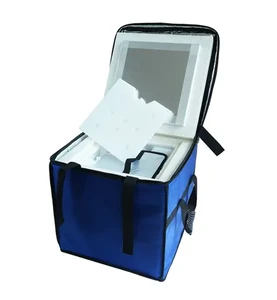
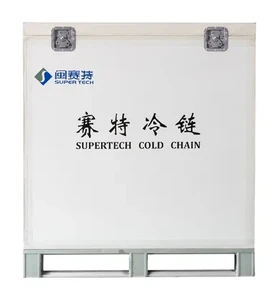
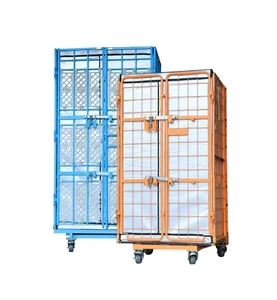
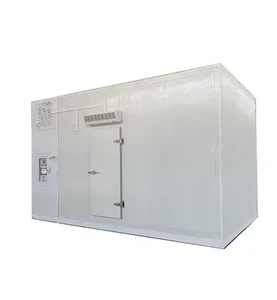
In 2026, the stakes of temperature excursion in cold chain logistics have never been higher. A single temperature deviation in a pharmaceutical warehouse can render an entire batch of biologics or vaccines unusable — representing not just financial loss but potential patient safety consequences. A humidity spike in a precision electronics storage facility can cause corrosion damage that is invisible until the product fails in the field. A power fluctuation during peak summer heat can push a temperature-controlled warehouse beyond its acceptable range within minutes if the building envelope is not performing at the required standard.
The refrigeration system gets most of the attention in cold chain design discussions. But experienced cold chain engineers know that refrigeration is only half of the thermal equation. The other half — and often the more neglected half — is the insulation material that forms the building envelope of the cold storage facility. No refrigeration system, regardless of its capacity or efficiency, can maintain stable internal temperatures if the walls, ceiling, floor, and door frames are allowing heat to enter faster than the system can remove it.
In 2026, the insulation material choices available to cold chain operators have expanded significantly beyond traditional foam boards. High-density XPS panels, polyurethane composite panels, fumed silica vacuum insulation panels, PU-VIP composite systems, and PCM phase-change coolants each offer different performance profiles for different applications. Understanding which material — or which combination of materials — is appropriate for a specific cold storage application is one of the most important technical decisions in cold chain infrastructure planning.
This guide covers the complete picture: why insulation material selection is critical for cold chain integrity in 2026, how high-density panels reduce cold bridge effects and temperature fluctuation, what the key material components are and how they work, how to compare XPS, PU panels, and fumed silica vacuum insulation panels for different applications, and what maintenance practices protect insulation performance over the long term. SUPERCOOLER's thermal insulation material range — including VIP panels, PU-VIP composites, lightweight VIP, fumed silica VIP, and PCM coolant — provides the technical reference points throughout this guide.
Why Insulation Material Is the Most Underestimated Variable in Cold Chain Performance
To understand why insulation material selection has become a critical decision in 2026 cold chain logistics, it helps to start with a clear definition of what insulation actually does — and what happens when it fails to do it adequately.
Insulation material is a thermal barrier designed to slow the rate of heat transfer between an external environment and a controlled internal space. In cold storage applications, the external environment is typically warmer than the internal space — sometimes dramatically so, particularly in tropical climates where outdoor temperatures can exceed 40°C while the internal warehouse must maintain 2°C to 8°C for pharmaceutical products or -20°C to -25°C for frozen goods. The insulation material's job is to resist the natural tendency of heat to flow from the warmer exterior to the cooler interior, reducing the thermal load that the refrigeration system must overcome to maintain the target temperature.
The performance of an insulation material is primarily characterized by its thermal conductivity — measured in W/(m·K) — which describes how readily heat passes through the material. Lower thermal conductivity means better insulation performance. The thickness of the insulation layer also matters: doubling the thickness of an insulation panel approximately halves the rate of heat transfer through that panel, all else being equal.
In 2026, the cold chain applications that place the highest demands on insulation material performance include:
Pharmaceutical cold storage — Products such as biologics, monoclonal antibodies, and cell therapies require temperature windows as narrow as 2°C to 8°C. Any excursion outside this range can trigger product degradation that is not visible to the naked eye but renders the product clinically ineffective or unsafe. The insulation material in a pharmaceutical cold storage facility must maintain this narrow temperature window even during power fluctuations, compressor maintenance cycles, and peak summer heat events.
Vaccine warehouses — Vaccine cold chain integrity is a public health issue as much as a logistics issue. The WHO's cold chain guidelines require continuous temperature monitoring and strict facility standards. Insulation material that allows temperature excursions — even brief ones — can compromise vaccine efficacy and trigger costly investigations and product recalls.
Precision electronics storage — Semiconductor components, optical sensors, and high-precision instruments are sensitive to both temperature and humidity. Inadequate insulation can allow condensation to form on stored components, causing corrosion damage that may not manifest until the product is in service.
Temperature controlled warehouse construction — As e-commerce cold chain and last-mile pharmaceutical distribution expand, the demand for temperature controlled warehouse facilities is growing rapidly. The insulation material choices made during construction determine the facility's energy efficiency, refrigeration load, and thermal stability for the entire operational life of the building.
Cold storage insulation material selection is therefore not a commodity procurement decision — it is a technical decision with direct consequences for product safety, energy cost, and regulatory compliance.
How High-Density Insulation Material Eliminates Cold Bridge Effects and Stabilizes Internal Temperature
The cold bridge effect is one of the most significant and most frequently underestimated thermal performance problems in cold storage construction. Understanding how it occurs — and how the right insulation material system prevents it — is essential for anyone designing or operating a temperature-controlled facility.
A cold bridge occurs when heat finds a path of lower thermal resistance through the building envelope, bypassing the primary insulation layer. In cold storage construction, cold bridges typically form at panel joints, metal fasteners and connectors, door frame interfaces, corner connections, floor-to-wall transitions, and areas where insulation panels have been damaged, compressed, or improperly installed. At each of these points, heat enters the cold room faster than it does through the properly insulated wall sections, creating localized warm zones that the refrigeration system must work harder to overcome.
The consequences of cold bridge formation are more serious than most operators realize until they appear in the temperature monitoring data:
Increased refrigeration load — Every cold bridge point adds to the total heat ingress that the refrigeration system must remove. In a large cold storage facility with multiple cold bridge points, the cumulative additional refrigeration load can be substantial — increasing energy consumption and accelerating compressor wear.
Unstable temperature zones — Cold bridges create areas within the cold room where the temperature is consistently higher than the target range. Products stored near these zones may experience temperature excursions even when the overall room temperature appears to be within specification.
Condensation and moisture damage — At cold bridge points, the surface temperature of the wall or ceiling may drop below the dew point of the internal air, causing condensation to form. Over time, this moisture can penetrate the insulation layer, reducing its thermal performance and creating conditions for mold growth and structural deterioration.
Vulnerability during power fluctuations — When the refrigeration system is temporarily offline — due to a power fluctuation, compressor maintenance, or a planned defrost cycle — the rate at which the internal temperature rises depends directly on the quality of the building envelope insulation. A facility with multiple cold bridge points will experience faster temperature rise during these events, increasing the risk of product excursion.
High-density insulation material systems address cold bridge risk through several mechanisms. Lower thermal conductivity slows heat transfer through the panel body itself. Stronger panel structure and better dimensional stability maintain joint integrity over time, preventing gaps from forming at seam locations. Composite panel systems that integrate structural and insulation functions reduce the number of metal connectors and fasteners that can act as thermal bridges. And advanced barrier film technology in vacuum insulation panels prevents moisture infiltration that would degrade insulation performance over time.
SUPERCOOLER states that vacuum insulation panels can provide 5 to 10 times better insulation performance than conventional foams at the same thickness, depending on design and application conditions. This performance advantage is particularly significant in applications where space constraints limit the thickness of the insulation layer — such as retrofit cold room installations, compact pharmaceutical storage units, and temperature-controlled packaging systems.
Thermal insulation for logistics applications must also account for the dynamic conditions of real-world operation: frequent door openings that introduce warm humid air, loading dock interfaces where the temperature differential is highest, and seasonal variation in outdoor temperatures that changes the thermal load on the building envelope throughout the year. High-density insulation material systems that maintain their performance under these dynamic conditions provide more reliable cold chain protection than materials that perform well only under static laboratory conditions.
Key Insulation Material Components in High-Performance Cold Storage Systems
A modern cold storage facility does not rely on a single insulation material — it uses a system of complementary materials, each optimized for a specific function within the building envelope. Understanding the role of each component helps buyers and engineers make informed decisions about material selection and system design.
XPS Insulation Panels
Extruded polystyrene (XPS) panels are rigid foam insulation boards with good moisture resistance, compressive strength, and dimensional stability. In cold storage construction, XPS is commonly used for floor insulation — where compressive strength is critical to support the weight of stored goods and forklift traffic — and as a base layer in multi-material wall systems. XPS panels are cost-effective for large-area applications and are widely available in standard thicknesses.
The thermal conductivity of XPS typically ranges from 0.030 to 0.038 W/(m·K), which is adequate for many cold storage applications but may require significant thickness to achieve the required thermal resistance in high-performance or ultra-low-temperature facilities.
Polyurethane Composite Panels
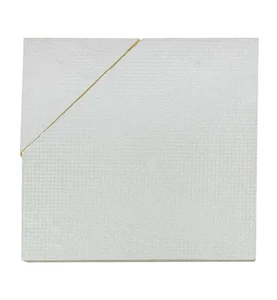
Polyurethane (PU) composite panels are the most widely used insulation material for cold room wall and ceiling construction. They consist of a rigid polyurethane foam core bonded between two facing sheets — typically steel, aluminum, or other structural materials — creating a sandwich panel that provides both thermal insulation and structural support.
PU composite panels offer thermal conductivity in the range of 0.022 to 0.028 W/(m·K), better than XPS, and their composite structure provides the rigidity and load-bearing capability needed for cold room wall and ceiling applications. The quality of the panel joints — the connection system between adjacent panels — is critical to overall system performance, as poorly designed or installed joints are a primary source of cold bridge formation.
Fumed Silica Vacuum Insulation Panels
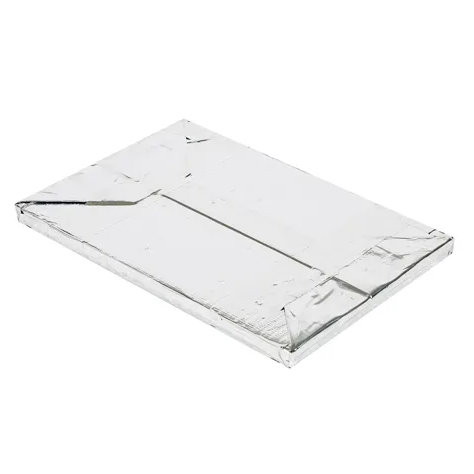
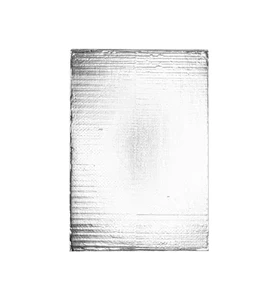
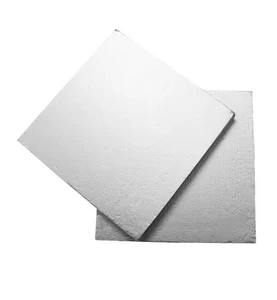
Fumed silica vip vacuum insulated panels represent the highest performance tier of insulation material currently available for cold chain applications. A VIP consists of a fumed silica core material enclosed in a high-performance barrier film, with the internal space evacuated to create a near-vacuum that dramatically reduces heat transfer by convection and conduction.
SUPERCOOLER's fumed silica VIP product is specified with a fumed silica core, high-performance barrier film, a temperature range of -80°C to 85°C, custom sizing capability, maximum dimensions of 800 × 1200 mm, and thickness options from 10 to 45 mm. The thermal conductivity of a properly manufactured fumed silica VIP is typically in the range of 0.003 to 0.008 W/(m·K) — approximately 5 to 10 times lower than conventional foam insulation at the same thickness.
This extraordinary performance advantage makes fumed silica vacuum insulation panels the material of choice for applications where space is limited, where the highest possible thermal resistance is required in a thin profile, or where the cost of temperature excursion is high enough to justify the premium over conventional foam insulation.
PU-VIP Composite Panels
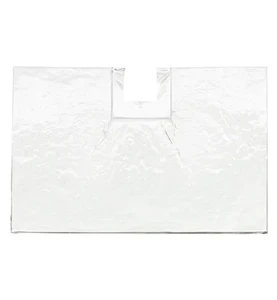
PU-VIP composite panels combine a polyurethane foam layer with an integrated VIP layer, providing both the structural support of PU foam and the ultra-high insulation performance of vacuum insulation in a single panel system. This combination is particularly valuable for cold room construction where both structural integrity and maximum thermal performance are required.
A critical handling requirement for PU-VIP composite panels — and for standalone VIP panels — is that they must never be cut or punctured after manufacture. SUPERCOOLER explicitly states that cutting or piercing the barrier film of PU-VIP composite panels will break the vacuum and permanently destroy the insulation performance of the VIP layer. This means that panel dimensions must be determined accurately during the design phase, and installation must be planned to avoid any on-site modification of the panels.
PCM Phase-Change Coolant
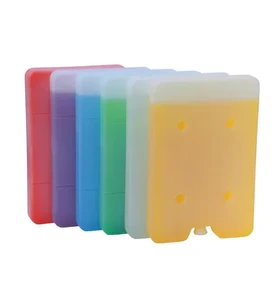
Phase-change materials (PCMs) are thermal buffering materials that absorb or release heat during their phase transition — typically from solid to liquid or liquid to solid — at a specific target temperature. In cold chain applications, PCMs act as "temperature batteries" that absorb heat when the internal temperature rises above the target and release it when the temperature falls below the target, smoothing out temperature fluctuations caused by door openings, power interruptions, or refrigeration cycling.
PCM systems are particularly valuable for last-mile cold chain delivery, backup temperature stability during power outages, and loading dock buffer zones where temperature fluctuation is highest. The PCM material must be selected to match the phase-change temperature to the specific product temperature requirement — a PCM designed for 5°C applications will not provide useful buffering in a -20°C frozen storage environment.
| Component | Primary Function | Thermal Performance | Key Application |
|---|
| XPS panel | Structural insulation, floor base | 0.030–0.038 W/(m·K) | Cold room floors, base layers |
| PU composite panel | Wall and ceiling insulation | 0.022–0.028 W/(m·K) | Cold room construction |
| Fumed silica VIP | Ultra-high performance insulation | 0.003–0.008 W/(m·K) | Pharma, compact systems |
| PU-VIP composite | Structure + VIP performance | Combined system | High-spec cold rooms |
| PCM coolant | Temperature buffering | Phase-change at target temp | Last-mile, backup stability |
Comparing Insulation Material Options: How to Match Material to Cold Chain Application
Selecting the right insulation material for a specific cold chain application requires matching the material's performance characteristics to the project's temperature requirements, space constraints, budget, and operational conditions. There is no universally optimal choice — the best material for a large frozen food warehouse is different from the best material for a compact pharmaceutical cold room or a last-mile delivery system.
| Material Type | Best Application | Primary Advantage | Key Consideration |
|---|
| XPS insulation board | Cold room floors, large-area base layers | Cost-effective, moisture-resistant, high compressive strength | Requires greater thickness for high-performance applications |
| PU composite panel | Cold room walls and ceilings, temperature controlled warehouse construction | Strong thermal barrier with structural support | Joint quality is critical — poor joints create cold bridges |
| Fumed silica vacuum insulation panels | Pharmaceutical cold storage, compact systems, precision logistics packaging | Ultra-thin profile with 5–10× better performance than foam | Cannot be cut or modified after manufacture |
| PU-VIP composite panel | High-spec cold rooms requiring both structure and maximum insulation | Combines foam structural support with VIP thermal performance | Requires accurate pre-installation design |
| PCM + insulation system | Last-mile delivery, power outage buffering, loading dock zones | Absorbs temperature fluctuation during dynamic events | Must match phase-change temperature to product requirement |
Application-Specific Selection Guidance
For large-area cold storage construction — pharmaceutical warehouses, food distribution centers, vaccine storage facilities — the primary insulation material system should be PU composite panels for walls and ceilings, with XPS for floor insulation. Panel thickness should be calculated based on the target internal temperature, the maximum expected external temperature, and the required thermal resistance to maintain temperature stability during refrigeration downtime events.
For compact pharmaceutical cold rooms and precision electronics storage — where space is limited and the cost of temperature excursion is high — fumed silica vacuum insulation panels provide the highest thermal resistance in the thinnest possible profile. The inability to cut VIP panels on-site means that room dimensions and panel layouts must be finalized during the design phase, but this constraint is manageable with proper planning.
For temperature controlled warehouse facilities that require both high thermal performance and structural robustness — such as multi-story cold storage buildings or facilities with heavy forklift traffic — PU-VIP composite panels offer the best combination of structural integrity and insulation performance.
For last-mile cold chain delivery and backup temperature stability — where the cold chain must be maintained during vehicle transit, loading delays, or power interruptions — PCM coolant systems provide the temperature buffering capability that passive insulation alone cannot deliver. The PCM absorbs heat during temperature rise events and releases it during temperature recovery, extending the time window within which the product remains within its acceptable temperature range.
Cold storage insulation material selection should always be supported by thermal calculation — a quantitative analysis of the heat transfer through the proposed insulation system under the expected operating conditions. SUPERCOOLER provides technical data sheets and thermal calculation support to help buyers determine the appropriate insulation thickness and material combination for their specific application.
Insulation Material Sourcing Checklist and Long-Term Maintenance Guide for Cold Chain Operators
Selecting and installing the right insulation material is only the beginning of cold chain thermal performance management. The long-term performance of any insulation system depends on the quality of the initial installation, the ongoing maintenance of the building envelope, and the early identification and repair of any damage or degradation that develops over time.
Common Insulation Performance Challenges
Cold bridge formation at panel joints, corners, and door frame interfaces due to poor installation or panel movement over time
Insufficient insulation thickness for the actual operating temperature differential, leading to higher-than-expected refrigeration load
Moisture penetration into foam insulation panels through damaged facing sheets or inadequate joint sealing, reducing thermal performance over time
Damaged VIP barrier film — from impact, drilling, or improper handling — that breaks the vacuum and permanently destroys the panel's insulation performance
Door gasket deterioration that allows warm humid air infiltration at the most thermally vulnerable point in the cold room envelope
Incorrect material selection for the target temperature range, resulting in insulation that performs adequately at design conditions but fails during extreme heat events or power fluctuations
Pre-Purchase Buyer Checklist
Before specifying or ordering insulation material for a cold storage project, buyers should confirm the following:
Target temperature range: frozen (-20°C to -25°C), chilled (0°C to 4°C), pharmaceutical (2°C to 8°C), or controlled room temperature (15°C to 25°C)
Maximum expected external temperature at the installation location, including seasonal peak conditions
Required insulation thickness based on thermal calculation for the target temperature differential
Thermal conductivity and density data for each material under consideration
Panel joint and sealing system design — confirm that the joint system prevents cold bridge formation
Fire performance rating and compliance with applicable building codes and pharmaceutical facility standards
VIP panel handling requirements — confirm that installation team understands the no-cut, no-puncture requirement
PCM phase-change temperature specification — confirm it matches the product temperature requirement
Custom sizing availability for non-standard room dimensions
Technical data sheets and thermal calculation support from the supplier
Inspection point planning for doors, corners, floor-wall transitions, and ceiling joints
Long-Term Maintenance Guide
Inspect all panel seams and joints quarterly for gaps, separation, or condensation that indicates cold bridge formation or moisture infiltration
Check door gaskets monthly and replace any gasket that shows cracking, compression set, or loss of seal contact
Never drill, cut, or attach fixtures to VIP or PU-VIP composite panels — use designated mounting systems that do not penetrate the insulation layer
Monitor temperature data continuously and investigate any recurring warm spots or temperature excursions that may indicate insulation degradation
Keep all wall and floor surfaces dry — address any water ingress or condensation source immediately to prevent moisture damage to insulation panels
Repair any impact damage to panel facing sheets promptly to prevent moisture infiltration into the foam core
Schedule thermal imaging inspections annually to identify cold bridge points and insulation degradation that are not visible to the naked eye
Document all maintenance activities and temperature excursion events to build a performance history that supports regulatory compliance and insurance requirements
Conclusion: The Right Insulation Material Is the Foundation of Cold Chain Integrity in 2026
In 2026, the cold chain facilities that protect pharmaceutical products, vaccines, biologics, and precision electronics are only as reliable as the insulation material systems that form their building envelopes. High-density XPS and polyurethane composite panels provide the structural and thermal foundation for cold room construction. Fumed silica vacuum insulation panels deliver ultra-high thermal performance in applications where space is limited or temperature control requirements are strictest. PU-VIP composite systems combine structural integrity with maximum insulation performance. And PCM coolant systems provide the temperature buffering capability that protects high-value cargo during the dynamic events — power fluctuations, loading delays, door openings — that passive insulation alone cannot fully address.
By selecting the right insulation material combination for each application, eliminating cold bridge formation through proper panel design and installation, and maintaining the building envelope through regular inspection and prompt repair, cold chain operators can protect their cargo, reduce their energy costs, and meet the increasingly strict temperature control requirements of pharmaceutical, electronics, and food logistics in 2026.
Contact SUPERCOOLER today to discuss your cold storage insulation material requirements, request technical data sheets and thermal calculation support, and explore fumed silica vacuum insulation panels, PU-VIP composite systems, and PCM coolant solutions for your temperature-controlled warehouse or logistics packaging application.
Frequently Asked Questions
Q1: What is the most important factor in selecting insulation material for cold storage?
The most important factor is matching the material's thermal performance — characterized by its thermal conductivity and the required insulation thickness — to the specific temperature differential between the external environment and the target internal temperature. For pharmaceutical cold storage requiring 2°C to 8°C in a tropical climate, the insulation requirement is significantly more demanding than for a controlled room temperature facility in a temperate climate. Buyers should always request thermal calculation support from their insulation material supplier to confirm that the proposed system will maintain the required temperature under the expected operating conditions, including during power fluctuation events.
Q2: What are fumed silica vacuum insulation panels and when should they be used?
Fumed silica vacuum insulation panels are high-performance insulation panels consisting of a fumed silica core material enclosed in a high-performance barrier film, with the internal space evacuated to near-vacuum conditions. This construction reduces heat transfer by convection and conduction to a level approximately 5 to 10 times lower than conventional foam insulation at the same thickness. SUPERCOOLER's fumed silica VIP is specified for a temperature range of -80°C to 85°C, with thickness options from 10 to 45 mm and custom sizing available. They are most appropriate for pharmaceutical cold storage, compact cold room installations, and precision logistics packaging where space constraints limit insulation thickness but high thermal performance is required.
Q3: How does insulation material prevent cold bridge formation?
Cold bridges form when heat finds a path of lower thermal resistance through