Fujian Supertech Cold Chain Technology Co., Ltd.
EN
FAQs
Company Name

FAQs

Q: Should insulated boxes be evaluated as part of a complete cold chain system rather than as standalone products?

Yes. A box is a passive component and cannot ensure compliance alone. Evaluate the complete system—product, coolant, loading order, route duration, and SOPs. A box performing well in isolation may fail on real lanes. System-level assessment guarantees repeatable quality and audit-ready performance.

Q: How should cold chain companies choose between EPS, EPP, and VIP insulated boxes for different shipping durations and temperature requirements?

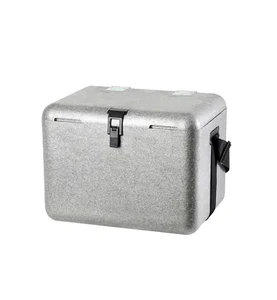
EPS and EPP are generally used for transportation with short duration (12-48 hours), and there are many options to choose from. Generally, if the duration is longer than 48 hours, their inherent insulation performance cannot be achieved, and it is necessary to choose VIP insulation boxes with better insulation performance. The insulation performance of ordinary VIP insulation boxes can generally last for more than 72 hours. With reasonable design, the insulation performance can be extended to 5-7 days or even longer.

Q: How can pharmaceutical logistics ensure real 2–8°C stability beyond theoretical insulation time?

Rely on lane validation (simulating worst-case seasons and dwell), real-time GPRS monitoring, and strict SOPs. Theoretical calculations are just a start. True stability comes from a packout system validated through actual repeated shipments, not from lab estimates alone.

Q: Which insulation material is best for high-value cold chain logistics: EPS, EPP, or VIP?

VIP offers extreme thermal resistance in minimal thickness (~10× EPS), ideal for space-constrained pharma.

Q: Why do reusable insulated boxes lose performance after multiple logistics cycles?

Degradation comes from mechanical wear, edge damage from stacking, and hidden cracks creating thermal bridges. Temperature cycling accelerates material fatigue. A box may look intact but have compromised panels or seals. Without regular inspection and replacement, hold time gradually diminishes.

Q: Should cold chain packaging be standardized as a full packout system instead of single boxes?

Yes. Standardize the full recipe—coolant conditioning, loading order, logger placement, and closure. Moving from "one-size-fits-all" to lane-specific packouts reduces coolant waste, cuts claims, and ensures every shipment is repeatable, trainable, and fully auditable.

Q: Why is there a gap between lab test results and real-world cold chain performance?

Labs can't replicate rough handling, stacking, customs delays, or repeated door openings. Real lanes have ambient swings and thermal bridges. A pristine box performs well in testing, but after a few cycles, edge wear and seal deformation significantly widen the gap between ideal and real performance.

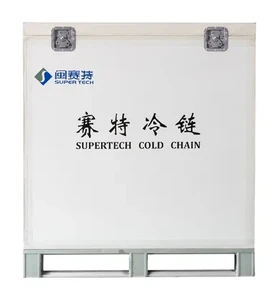
Q: Why are cold chain pallet containers more suitable than standard insulated boxes for long-distance pharmaceutical transport?

Pallet containers have greater thermal mass and coolant capacity for longer autonomy. They reduce handling touchpoints and integrate with standard freight systems, lowering dwell and rough-loading risks. They are the preferred solution for full-pallet, multi-modal long-haul pharma shipments.

Q: Do cold chain pallet systems require VIP or PCM materials to maintain long-duration temperature control?

Not necessarily. However, by utilizing VIP insulation materials, we can significantly reduce the amount of PCM required or decrease the volume of the container, ultimately leading to cost savings in shipping.

Q: Why does the same pallet insulated container perform differently across different logistics lanes?

Lane risk profiles differ—waiting times, dock temperatures, vehicle AC performance, and seasonal variations vary. A box validated for a temperate route may fail on a Middle Eastern summer lane. Performance is highly context-dependent, requiring lane-specific validation.

Q: Should cold chain pallet containers be treated as a system engineering solution rather than a standalone packaging product?

Yes. They integrate insulation, coolant layout, stacking, monitoring, and handling protocols. Performance relies on subsystem synergy, not just material specs. System engineering involves heat-load calculation, PCM timing design, and field validation to ensure overall solution reliability.

Q: How can pharmaceutical supply chains prevent temperature excursions in pallet-level cold chain shipments?

Combine lane pre-validation (including worst heat), real-time GPRS/GPS alerts, dock pre-cooling checks, minimized dwell, and handler training. The key is building a closed-loop "alert-intervention-traceability" system, rather than relying solely on passive packaging.

Q: Can H26-type VIP insulated boxes realistically replace EPS/EPP cold chain systems?

Not entirely. VIP is a performance enhancer, not a universal substitute. It excels in controlled airfreight but is vulnerable to punctures in rough handling. Hybrid solutions—EPP outer shell with VIP inner liners—often provide the best balance of durability and extreme insulation.

Q: Why does the same VIP insulated box show different performance across shipping lanes?

VIP performance hinges on edge seal integrity. A minor dent or corner leak from rough handling can drop thermal resistance by 80%. Air pressure changes (air cargo) and vibration also accelerate vacuum loss. Performance is highly sensitive to handling intensity and environmental stress.

Q: Why is last-mile delivery the biggest failure point in pharmaceutical cold chain logistics?

It concentrates multiple handoffs, urban heat, non-conditioned elevators, and exposure during inspection. Couriers often lack thermal discipline, and monitoring is mostly passive (post-trip). It is the intersection of systems, people, and environment with the smallest margin for error.

Q: Why is transport risk more important than packaging cost in pharmaceutical cold chain economics?

One excursion causing product loss, regulatory fines, and brand damage far outweighs any packaging savings. Packaging is a tiny fraction of landed cost. Investment should focus on failure prevention—robust packaging and monitoring are insurance against catastrophic financial loss.

Q: Why are reusable cold chain logistics systems gaining attention?

Driven by environmental regulations (carbon reduction) and long-term cost savings. High-quality EPP/VIP boxes lower per-use costs over hundreds of cycles within 2-3 years. However, success requires an efficient return network and strict quality grading to prevent hidden damages.

Q: Why can’t insulated boxes alone ensure end-to-end food cold chain integrity?

Boxes only slow heat gain; they don't actively cool. Core product temperature upon packing, full coolant preconditioning, and trapped hot air are critical. If initial product temperature exceeds the limit, even the best box cannot bring it down to safe levels during transit.

Q: Why do dry ice and gel packs often fail to maintain expected performance in food cold chain shipping?

Failures stem from incomplete pre-conditioning, incorrect quantity calculation ignoring ambient extremes, or poor placement (close freezes product; far loses effect). Transit delays exhausting design margins are common. More coolant isn't better—matching phase-change duration to lane time is key.

Q: Why is PCM / eutectic plate technology increasingly used in food cold chain packaging?

PCM absorbs latent heat at precise temperatures (e.g., 0°C or 5°C), providing stable temperature plateaus. Unlike dry ice (sublimation) or gel packs (steep warm-up), PCM offers extended periods and is reusable—ideal for high-value seafood and fresh e-commerce.

Q: Why is last-mile delivery the highest risk in food cold chain logistics?

Urban delivery faces traffic, failed first-time deliveries, and lack of temporary cold storage. Brief exposure above 4°C can cause histamine formation in seafood. Monitoring is mostly passive; by the time a breach is logged, the food has often been out of range too long for rescue.

Q: Why does the same insulated cooler bag perform differently across delivery scenarios?

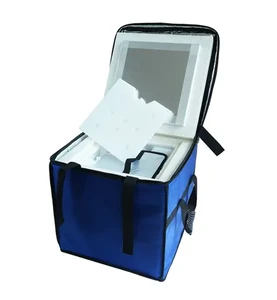
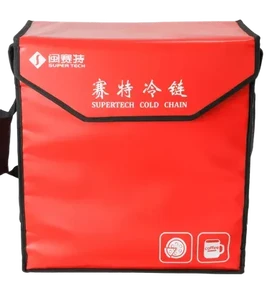
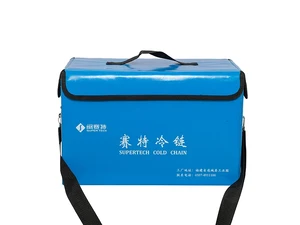
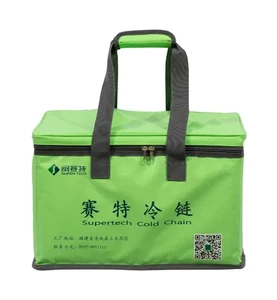
Scenarios vary in solar radiation (e.g., open e-bike vs AC van), initial payload thermal mass, PCM usage, and zipper seal integrity. These external and operational variables cause the same passive bag to exhibit significantly different thermal hold times.

Q: Are foldable cooler bags truly suitable for B2B cold chain logistics, or just lightweight packaging solutions?

Suitable for specific short-haul, high-frequency, returnable routes (e.g., catering, desserts). However, thin insulation and thermal bridges at folds prevent replacement of rigid boxes for pharma or >48h trips. In B2B, it's a cost-effective lightweight solution.

Q: Does foldable design inherently reduce thermal insulation performance?

Yes. Folds compress insulation thickness and create continuous thermal bridge channels. Zipper/Velcro closures have poorer airtightness than rigid compression seals. With the same material, foldable designs typically provide 30-40% shorter hold times than rigid boxes.

Q: Why is the suitability of foldable cooler bags so different between food logistics and pharmaceutical cold chain?

Rooted in risk tolerance. Food tolerates brief excursions (affecting taste, not safety); pharma demands zero deviation with validated documentation. Foldable bags’ thin walls and thermal bridges fail pharma GSP validation, but they perfectly match food logistics’ need for flexibility and economy.

Q: Why are vacuum and aerogel-based insulation materials replacing traditional foam insulation?

They offer unprecedentedly low thermal conductivity, enabling thinner walls and longer hold times. For airfreight and compact pharma boxes, saved space increases payload. However, high cost and fragility limit them to high-end biologics and devices, while foam dominates routine logistics.

Q: Why is structural design more important than material type in thermal insulation systems?

Even the best material fails with lid gaps, unbroken thermal bridges at panel joints, or load-induced deformation. Heat always follows the path of least resistance. Effective labyrinth seals, rib reinforcements, and edge wrapping often boost hold time more than material upgrades alone.

Q: Why are single-use temperature loggers still dominant in vaccine logistics?

Single-use loggers are cheap, require no reverse logistics, and suit mass distribution. For routine vaccines, post-trip data download meets basic compliance. However, for ultra-sensitive mRNA vaccines, reusable GPRS devices with real-time alerts are rapidly gaining share for critical batches.

Q: Why do cold chain shipments get rejected even when temperature logs look normal?

Rejection may occur due to visible package damage, poor coolant condition, or logger placed too safely (missing hot spots). Also, missing opening-temperature records or SOP checkpoint logs, even with a clean logger file, create documentation gaps that fail strict compliance audits.

Q: Why does logger placement inside a shipment change temperature results significantly?

Near coolant reads artificially cold; near walls or hot air pockets reads too warm. Ideal placement is embedded in the product core or at predicted hot spots. Placing it freely in an air gap measures air, not product core temperature, leading to frequent misjudgment.

Q: Why does pharma trust lane validation data more than single temperature logger readings?

Single readings suffer from placement errors or drift. Lane validation repeatedly tests the complete system (box+coolant+loading) under extremes, proving statistical reliability. Even if one reading is odd, the validation confidence interval helps QA decide if it's a true breach or negligible anomaly.

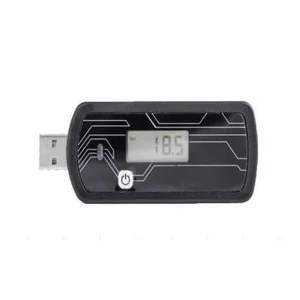
Q: Why are GPRS temperature monitors replacing traditional USB data loggers in cold chain logistics?

USB loggers only allow post-trip downloads, failing to prevent loss. GPRS transmits temperature and location in real-time via cellular networks, triggering instant alerts. This enables intervention (e.g., adjusting reefer settings), shifting from reactive tracing to proactive prevention.

Q: Why do real-time GPRS temperature monitors expose system failures more than traditional loggers?

GPRS continuous data reveals hidden issues like door-open heat spikes at docks or slow compressor-failure climbs. Traditional loggers expose faults only at download, making root-cause analysis vague. Real-time curves pinpoint exactly when and where the process broke down.

Q: Why must GPRS temperature monitors be combined with GPS tracking?

Temperature tells "what" happened; GPS tells "where." Combining them pinpoints failures to specific docks or hubs (e.g., Chicago staging vs Atlanta unloading). This enables targeted corrective actions and clear liability assignment.

Q: Why is GPRS temperature monitoring becoming standard in vaccine cold chain logistics?

Vaccines (especially mRNA) are ultra-sensitive and irreplaceable. WHO/FDA increasingly mandate real-time visibility. GPRS ensures compliance, and its alerts enable CDC to pre-arrange backup storage during transit, preventing mass batch报废 and safeguarding public health.

Q: Is the real value of GPRS temperature monitors alerting rather than recording?

Core value lies in alerting. Recording is baseline compliance; alerting creates economic value by providing an intervention window. Receiving an alert within 5 minutes of a rise and checking the door saves a $100k pallet, whereas downloading 8 hours later only files a loss.

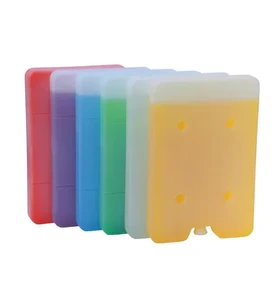
Q: Is the real value of PCM ice packs temperature stability rather than cooling power?

Core value is thermal stability, not extreme cold. PCM maintains a constant melting temperature (e.g., 5°C) via latent heat. Dry ice offers -78°C but warms rapidly after sublimation. PCM provides a stable plateau for 2-8°C biologics, which is far more valuable than instantaneous cooling.

Q: Why do different PCM temperature ranges require completely different formulations?

PCM relies on specific phase-change points. 5°C requires eutectic salts; -20°C uses NaCl-based brines; 15°C ambient uses paraffins. 

Q: Why are PCM ice packs more flexible in food logistics than pharmaceutical cold chain?

Food (e.g., fresh produce, chocolate) tolerates broader ranges (0-8°C or 15-25°C), allowing flexible PCM choices. Pharma demands exact bands (2-8°C), requiring costly re-validation for any deviation. Thus, food adopts cheap PCM quickly, while pharma invests in rigorous stability studies.

Products
We use cookies to offer you a better browsing experience, analyze site traffic and personalize content. Part of the tracking is necessary to ensure SEO effectiveness,
By using this site, you agree to our use of cookies. Visit our cookie policy to learn more.
Reject Accept