In global cold-chain logistics, refrigerated containers are the backbone of cross-ocean transport for fresh produce, pharmaceuticals, and temperature-controlled goods. Yet a long-underestimated contradiction continues to erode operators’ margins: you simply cannot have both maximum insulation and maximum cargo space.
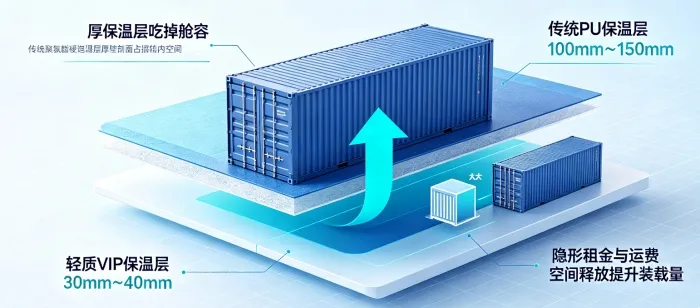
Conventional solutions rely on 100 mm to 150 mm thick polyurethane (PU) rigid foam insulation. This “heavy armor” certainly gets the job done thermally, but it also consumes 10% to 15% of the container’s internal usable volume — space that could otherwise be carrying paying freight.
For fresh-food e-commerce, pharmaceutical cold chains, and high-value cargo, every cubic meter represents real revenue. That means every voyage effectively incurs hidden rental and freight costs just to "keep the cold in." What’s more, as environmental regulations tighten around blowing agents and carbon emissions, traditional PU materials are facing growing policy and performance pressures.
Is this dilemma truly unsolvable?

To address this refrigerated-container "dilemma," SuperCooler offers a clear solution.
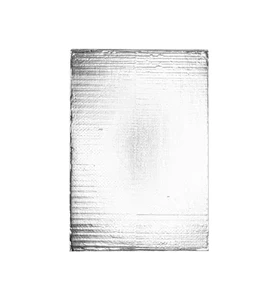
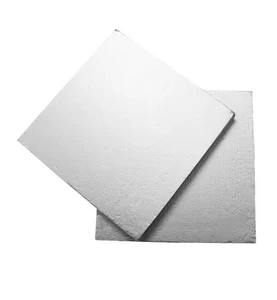
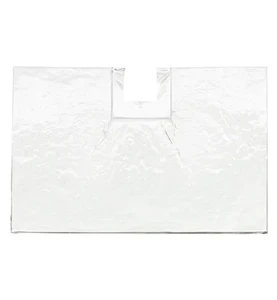
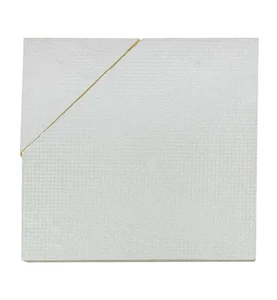
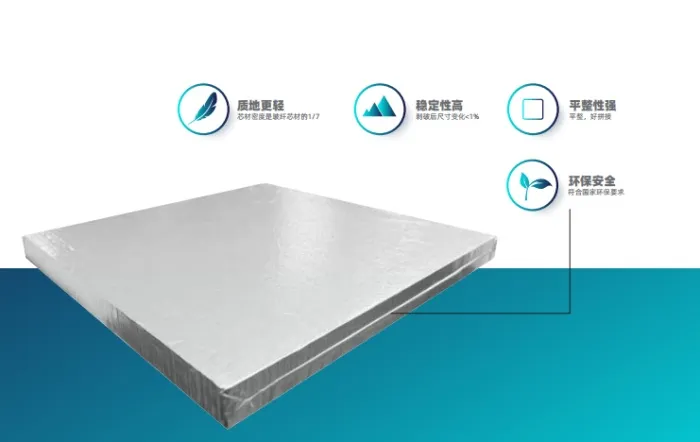
The core principle of lightweight Vacuum Insulation Panels (VIP) — using a high-barrier laminated film to encapsulate a porous core material, with the interior maintained under high vacuum — drastically reduces air convection and gaseous heat conduction. Under this design, insulation performance no longer depends on stacking thickness, but on breaking through technological barriers.
The table below compares common insulation materials, using Zhuoqing VIP (0.0045 W/m·K) as the baseline to show the thickness required to achieve equivalent thermal performance:
Material | Thermal Conductivity W/(m·K) | Multiple vs. Zhuoqing VIP |
Zhuoqing VIP (Vacuum Insulation Panel) | 0.0045 | 1.0 |
Yunqing VIP | 0.0055 – 0.0065 | 1.2 – 1.4 |
Polyurethane Rigid Foam (PU) | 0.020 – 0.028 | 4.4 – 6.2 |
Extruded Polystyrene (XPS) | 0.028 – 0.035 | 6.2 – 7.8 |
Expanded Polystyrene (EPS) | 0.035 – 0.045 | 7.8 – 10 |
Rock Wool / Glass Wool | 0.035 – 0.050 | 7.8 – 11 |
To achieve the same insulation effect, Zhuoqing VIP panels require only 1/5 to 1/10 the thickness of traditional materials, while Yunqing VIP requires 1/4 to 1/8.
For refrigerated containers — where every inch of internal space is fiercely contested — this is a decisive competitive advantage.
A direct comparison: using Zhuoqing VIP (0.0045 W/m·K) as the benchmark, a 30 mm to 40 mm VIP composite structure can fully replace the traditional 100 mm to 150 mm PU insulation layer. That means the internal width and height of your reefer container are instantly freed up, delivering an immediate and tangible increase in cargo loading capacity.

In real-world cold-chain operations, initial performance does not equal lifetime performance. Traditional organic materials (PU) suffer from gradually increasing thermal conductivity after 3-5 years due to blowing-agent outgassing. Inorganic materials like rock wool, once they absorb moisture, experience a catastrophic drop in insulation capability.
Comparison Aspect | Lightweight VIP | Traditional Organic / Inorganic Materials |
Thermal Resistance Degradation | Depends on barrier film integrity; high-quality products maintain long-term performance. | PU degrades year by year as blowing agents escape; rock wool conductivity spikes after moisture absorption. |
Moisture Resistance | High-barrier film inherently resists water vapor permeation. | PU requires additional moisture barriers; rock wool is highly susceptible to moisture ingress and failure. |
Structural Stability | Rigid, board-shaped, with good dimensional stability — no settling. | PU may shrink and crack over the long term; fibers may settle and compact. |
SuperCooler lightweight VIP panels employ a high-aluminum composite film and multi-layer metallized coating structure, ensuring reliability throughout the entire service life of refrigerated containers.
Beyond space savings and thermal advantages, the lightweight nature of VIP panels is equally significant. In both overland and maritime shipping — where total vehicle weight is strictly limited — every kilogram of deadweight saved means one additional kilogram of cargo payload, or measurable fuel savings.
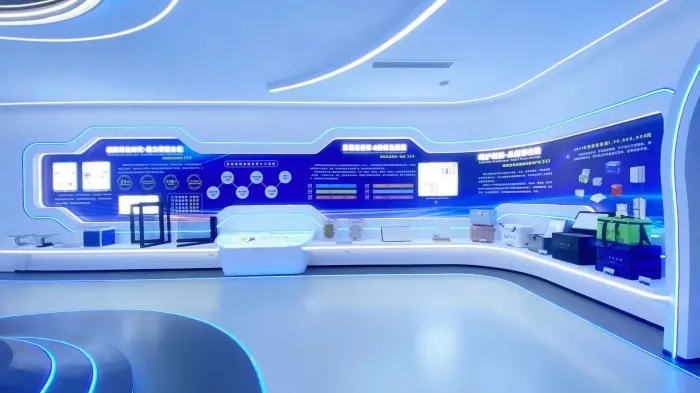
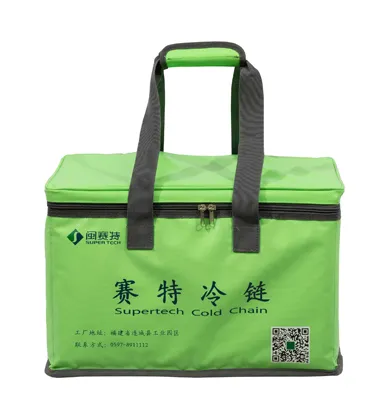
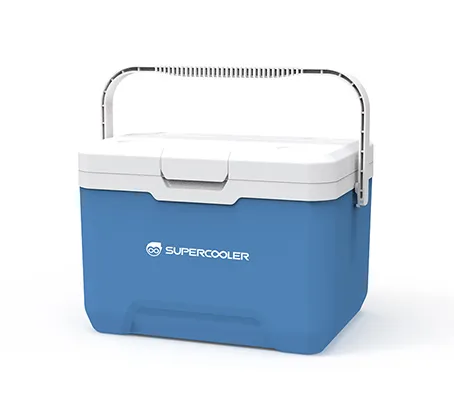
SuperCooler is consistently dedicated to applying aerospace-grade vacuum insulation technology to civilian cold-chain applications. We provide not just VIP panels as a standalone product, but systematic temperature-control solutions tailored to refrigerated containers, refrigerated trucks, insulated boxes, and other diverse scenarios.
When the insulation layer shrinks from 150 mm down to just 30 mm, it’s not just space that is released — it’s the unlimited potential of your entire cold-chain operation.

As a professional manufacturer of lightweight vacuum insulation panels, SuperCooler leverages its parent company Supertech’s two decades of core vacuum-insulation expertise. We focus on upgrading the thermal insulation layers of cold-chain equipment, providing full-chain technical support — from core materials and barrier-film encapsulation to system-level composite applications.
If you are seeking a breakthrough in balancing space utilization and energy efficiency for your refrigerated containers, we welcome an in-depth discussion.
Make every cubic meter carry more value.