
Fujian Supertech Cold Chain Technology Co., Ltd.
EN
News

Soaring Freight Rates + Tight Cargo Space: How Much Freight Cost Is Your Cold-Chain Container Burning Per Trip? – SuperCooler Makes Air Cargo Cold-Chain Costs No Longer ‘Out of Control’

Table of Content [Hide]

    Summary: The air freight market in 2026 is undergoing a brutal stress test.


    Conflicts in the Middle East have torn global supply chains apart. Connectivity through Dubai and Doha hubs has plummeted, with regional capacity dropping by as much as 50% at one point. Freight rates on the Middle East-Europe route surged 89%, and global air cargo spot rates spiked 41% year-over-year.


    When runaway freight rates become the new normal, is your cold-chain container a cost center that eats away profits, or a cost-saving lever that boosts efficiency?


    SuperCooler air cargo containers – turning crisis into opportunity.


    soaring-freight-rates-tight-cargo01.png


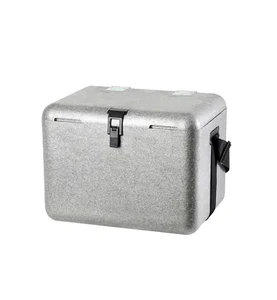
    Ordinary Foam Boxes Are Eating Your Profits

    Conventional lightweight insulated boxes (e.g., foam boxes) are affordable and portable, but they have fatal flaws in air cargo cold-chain operations.


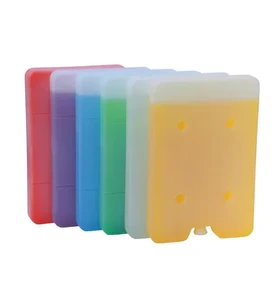
    Airport cargo holds experience wild temperature swings from -5°C to 10°C year-round, and cross-timezone flights face both ground heat and high-altitude cold. Even with phase-change materials, foam boxes deliver only about 5 hours of effective temperature control – beyond that window, internal temperatures rise to ambient levels within 2 hours.


    For international air cargo cold chains that typically run 24–72 hours, this means:

    • Temperature loss → cargo write-off

    • Cargo write-off → direct loss of cargo value (potentially tens of thousands of dollars)

    • Damaged client trust → broken long-term partnerships


    The "Impossible Triangle" of Aviation-Grade Cold-Chain Containers

    A truly capable cold-chain container for extreme air environments must conquer three challenges at once:


    • Lightweighting – air freight is billed by weight or volume; every gram saved is direct cost reduction.

    • High insulation – dozens of hours of cross-border transport require precise temperature control with minimal fluctuations.

    • Low cost – packaging costs must not erode profits – savings must exceed spending.


    Traditional materials like polyurethane and EPS foam often trade off one for another – thicker insulation adds bulk and weight, while thinner insulation fails to hold temperature.

    Is this "impossible triangle" truly unsolvable?


    soaring-freight-rates-tight-cargo02.png


    SuperCooler’s Lightweight VIP Redefines the Value of Air Cargo Containers

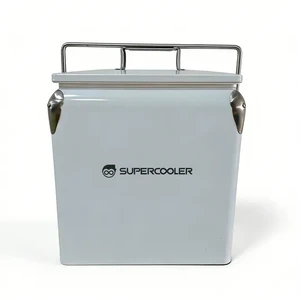
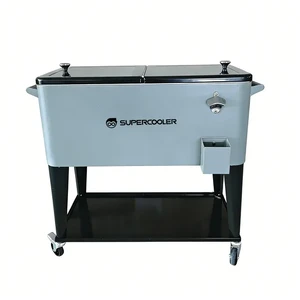
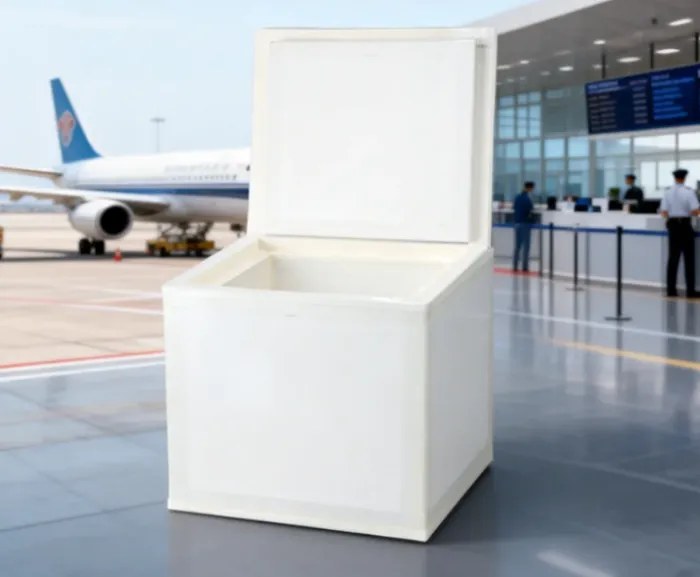
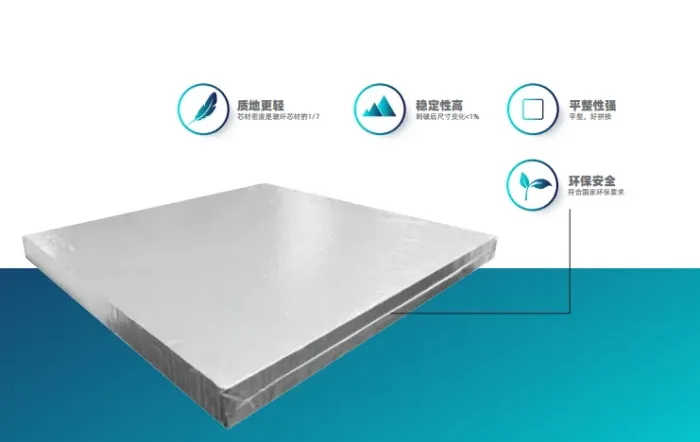
    The SuperCooler cold-chain container is powered by the Lightweight VIP – the breakthrough that changes the game.


    Its parent company, Supertech (688398), is a listed company on the Sci-Tech Innovation Board and a co-drafter of the industry standard "Vacuum Insulation Panels (VIP) for Household Appliances". With more than 20 years of accumulated expertise in vacuum insulation, Supertech has brought that technology to cold-chain applications through the SuperCooler Lightweight VIP.


    Insulation performance: 10 times better than foam boxes


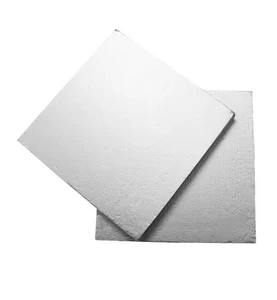
    The Lightweight VIP inside SuperCooler containers achieves a thermal conductivity of 0.0055–0.0065 W/(m·K) – that’s 5 to 10 times better than ordinary EPS foam. In extreme environments – 35°C summer heat or -20°C winter cold – paired with PCM phase-change materials, SuperCooler containers maintain stable temperatures for 48 to over 120 hours (temperature zones and durations are customizable) – completely passive, no active intervention required.


    By contrast, traditional foam boxes last only about 5 hours. The difference is not just incremental – it’s an order of magnitude.


    Lightweighting: 6 kg Saved Per Container, $72 Saved Per Trip

    Comparison

    Traditional VIP Core

    Lightweight VIP (SuperCooler)

    Savings

    Core density

    180–220 kg/m³

    42±5 kg/m³

    Midvalue density

    200 kg/m³

    42 kg/m³

    Insulation layer weight

    200×0.038 = 7.6 kg

    42×0.038 = 1.6 kg

    ~6 kg saved


    SuperCooler Lightweight VIP cuts about 6 kg per insulated container.


    At current air freight rates of over $20 per kg, each shipment saves roughly $72 in freight costs.


    If your company ships 100 containers per month, that’s over $7,000/month in freight savings – nearly $90,000 per year.


    Every gram you shed is money wiped off your freight bill.


    Volume Reduction: More Cargo in the Same Cargo Hold

    Comparison

    Traditional Insulation

    SuperCooler

    Insulation layer thickness

    50–80 mm

    25–35 mm

    Effective internal volume

    Baseline

    +15% to 25%

    Loading capacity per unit space

    Baseline

    +25%


    The same air cargo compartment now holds more goods – further reducing unit freight cost.


    That’s true "space utilization" – more cargo for the same freight spend.


    Three Reasons to Choose SuperCooler Lightweight VIP

    Supertech (688398) is a Sci-Tech Innovation Board listed company and co-drafter of the industry VIP standard – technical strength you can trust.


    In-house R&D and production of VIP panels – quality and cost control from the source, no "brand markup."


    Customizable solutions covering all temperature ranges – from pharmaceutical 2–8°C to fresh/frozen -18°C to 4°C.


    SuperCooler – turning air cargo cold-chain from a cost center into a competitive advantage.


    References
    Products
    We use cookies to offer you a better browsing experience, analyze site traffic and personalize content. Part of the tracking is necessary to ensure SEO effectiveness,
    By using this site, you agree to our use of cookies. Visit our cookie policy to learn more.
    Reject Accept