By 2026, China's total cold storage capacity has surpassed 180 million cubic meters—yet less than 30% of that capacity meets high-standard specifications.
On one side, fresh-food e-commerce and the prepared-meal industry are exploding with growth. On the other, operators are grappling with soaring electricity bills, unstable temperature control, and finger-pointing after-sales service.
The cold storage industry has moved past the rough-and-tumble era of "competing on price." We're now entering a technological revolution driven by efficiency, energy savings, and scenario-specific design.
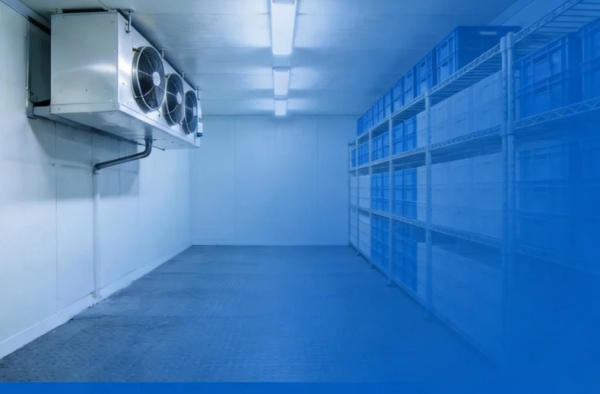
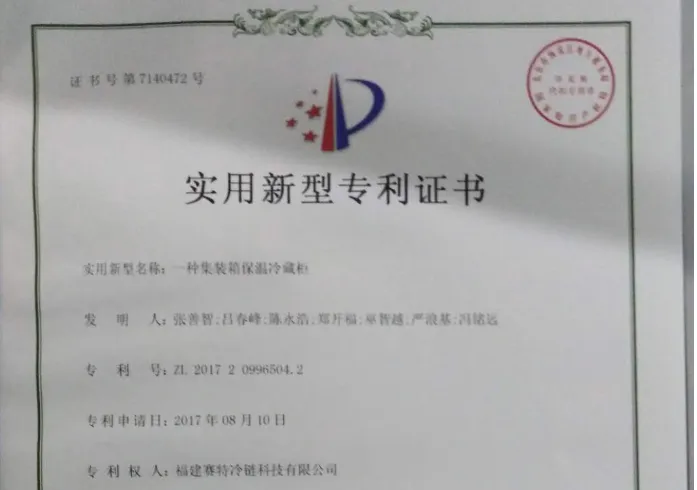
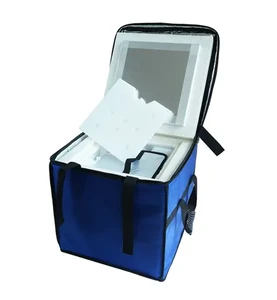
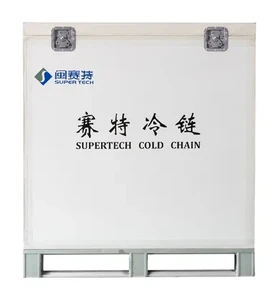
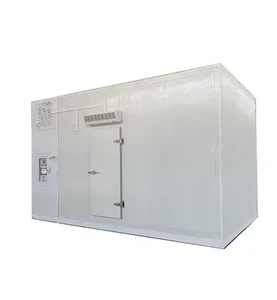
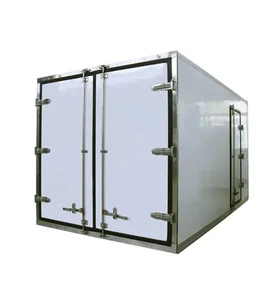
As a cold-chain temperature-control solutions provider backed by parent company Supertech's (688398) vacuum insulation technology, Supertech Cold Chain has developed a PU (Polyurethane) + VIP (Vacuum Insulation Panel) composite prefabricated panel cold storage solution—targeting the industry's deepest pain points and delivering quantum leaps in energy consumption, safety, and space utilization.
The Pain Points: The "Four Mountains" Weighing Down Cold Storage Operators
Cold storage operators face four persistent core challenges:
Pain Point 1: Electricity Bills Eat Into Profits, Energy Consumption Stays Stubbornly High
Electricity accounts for 30%–50% of operating costs.
Traditional field-assembled cold rooms have poor compatibility, consuming 30%–50% more energy than factory-built modular units.
Hot-gas defrosting alone consumes over 20% of total energy—and "frost-free" cycling wastes even more.
Pain Point 2: Unstable Temperatures Lead to Devastating Product Loss
Manual temperature adjustments often result in fluctuations exceeding 50°F (10°C) .
Fresh-food spoilage rates remain stubbornly high—some businesses lose over 5% of their inventory.
That's direct financial loss, chipping away at margins with every shipment.
Pain Point 3: No One Takes Responsibility When Something Goes Wrong
Field-assembled cold rooms rely on multiple suppliers—compressors from one, condensers from another.
When issues arise, each party blames the other.
With no single accountable party, the entire inventory inside the cold room is often written off during repairs.
Pain Point 4: Mismatched Scenarios Lead to Low Equipment Utilization
Generic cold rooms can't meet specialized requirements: pharmaceutical GSP compliance, multi-temperature-zone integration for prepared meals, or -22°F (-30°C) quick-freezing for seafood.
It's like driving a semi-truck to deliver a single package—equipment is underutilized and inefficient.
The Solution: Supertech Cold Chain's "PU + VIP" System
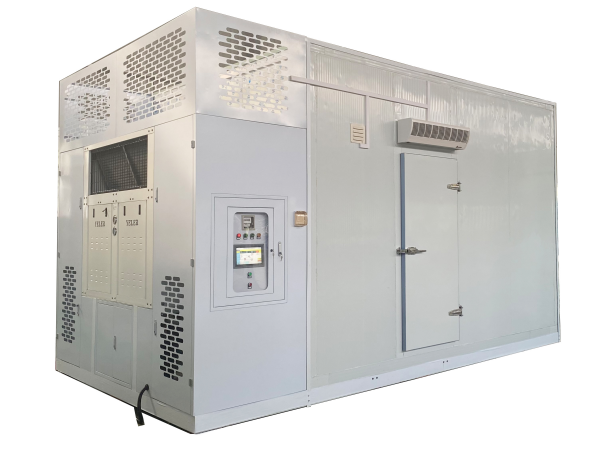
To address all five pain points, Supertech Cold Chain—leveraging its parent company Supertech's core vacuum insulation technology—introduces the prefabricated panel-assembled cold storage solution. No civil construction is required, eliminating the inherent flaws of traditional poured concrete and field-assembled units.
1. High Efficiency & Energy Savings: Breaking Through Low-Temperature Limits While Cutting Power Use
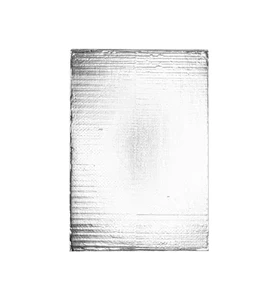
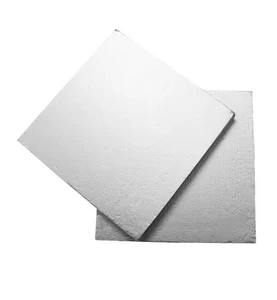
Core technology: A composite sandwich structure using PU (polyurethane) + VIP (Vacuum Insulation Panels) . With Supertech VIP panels achieving an ultra-low thermal conductivity of ≤0.002 W/(m·K), insulation performance is 6–8 times better than traditional polyurethane.
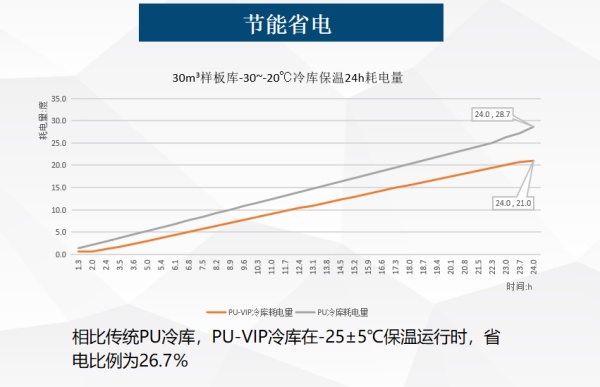
Measurable results: For the same insulation requirements, panel thickness is drastically reduced—meaning less floor space and greater usable capacity. Compared to standard PU cold rooms, a PU-VIP cold room operating at -22°F (-30°C) shows virtually no external condensation (only minor traces at joints), completely eliminating cold-bridge leakage and wasted energy.
2. Power-Outage Protection: A Safety Net You Can Count On
In simulated power-failure tests, raising the temperature from -40°F (-40°C) to ambient took 66% longer in the PU-VIP cold room compared to conventional units.
Even during unexpected outages, your inventory has a much longer "golden window" for rescue—drastically reducing spoilage risk.
3. Prefabricated Assembly: Fast, Simple Installation
Prefabricated panels require no civil construction—smaller footprint, faster build.
Standardized manufacturing ensures consistent quality across all panels, eliminating the risks of uneven on-site spray-foam thickness or poor sealing.
Installation and commissioning are exceptionally simple, cutting project timelines by 50% .
Performance Comparison: Supertech PU-VIP Cold Room vs. Traditional Cold Storage
Here's a side-by-side comparison of key metrics:
Comparison Dimension | Traditional Cold Room | PU-VIP Cold Room (Supertech Cold Chain) | Value Proposition |
Insulation Wall Thickness | Typically 150–200mm | Only 80–120mm (same insulation performance) | Increases usable capacity by 10%–15% |
No-Load Daily Power Consumption | Baseline (100%) | Approximately 60%–70% of baseline | Saves 25%–40% on electricity |
External Wall Condensation | Heavy condensation at -22°F (-30°C) operation | Only minor traces at joints/door seals | Reduces cold-bridge losses, extends structure lifespan |
Installation Method | Field-assembled, multiple suppliers, long lead times | Prefabricated panel assembly, single-source delivery | Cut project timeline by 50% |
Multi-Scenario Precision Matching: Not Just Produce—Pharma Cold Chain Too
Pharmaceutical Cold Chain (Reagents / Blood Products / Drugs)
Superior panel insulation and exceptionally uniform temperature distribution easily meet GSP/GMP compliance and validation requirements.
Prepared Meals / Central Kitchens (Origin Processing)
Multi-temperature-zone design support (-31°F quick-freeze + 0°F frozen storage + 32°F fresh-keeping) enables integrated workflows—from raw-material pre-cooling to rapid freshness-locking to finished-goods storage—while preventing cross-contamination.
Fresh Produce / Poultry / Meat & Eggs
Anti-condensation design for high-humidity preservation environments, paired with efficient sterilization and filtration systems, extends shelf life.
Electronics / Bioengineering
Custom ultra-low-temperature (-112°F / -80°C) solutions available for specialty material storage.
The Future: Where Are Cold Storage Manufacturers Headed?
Looking ahead from 2026, cold storage manufacturers looking to break out of intense competition must evolve in the following directions—exactly the path Supertech Cold Chain is already pursuing:
Direction 1: From "Selling Panels" to "Selling Solutions"
The future competitive edge lies in scenario-specific customization. Provide modular, scalable solutions tailored to the distinct pain points of pharmaceuticals, prepared meals, and community e-commerce micro-fulfillment centers.
Direction 2: From "High Energy Consumption" to "Net-Zero Operations"
As carbon-peak and carbon-neutrality goals advance, PU+VIP technology will gradually replace traditional single-PU panels—helping customers achieve optimal Life-Cycle Cost (LCC) .
Conclusion
As the cold-chain industry pushes toward high-quality development, Supertech Cold Chain is committed to being your most trusted "temperature-control steward." We firmly believe that only through technological innovation (VIP vacuum insulation) and deep scenario expertise can we fundamentally solve the pain points of energy waste and product loss.
Supertech Cold Chain—backed by parent company Supertech's vacuum insulation technology—ensures every kilowatt-hour is put to its best use, and every ingredient stays as fresh as the moment it was harvested.