
Fujian Supertech Cold Chain Technology Co., Ltd.
EN
News

How Can a Car Refrigerator Hold More and Stay Cold Longer After a Power Outage? Insulation Material Selection Is Key

Table of Content [Hide]

    Car camping, RV travel, and long-distance supply transport are turning car refrigerators from “optional items” into “everyday equipment.”


    But in real use, the problems are also very concentrated: the unit is too heavy, the interior space is small, cold retention after power loss is short, and power consumption is high.


    For car refrigerator manufacturers, many of these experience issues point to the same component—the insulation layer.


    Make it thicker, and it takes up capacity; make it thinner, and cold retention is insufficient. Use lightweight materials, and insulation may not keep up; use high-insulation materials, and weight may rise.


    The core of the contradiction is how to choose the insulation material.


    This article combines common operating conditions for car refrigerators to compare EPP foam, traditional fiberglass VIP, and SuperCooler Yunqing VIP vacuum insulation panels, for reference by the industry and users.


    The following data are for typical operating conditions; specific projects should be based on measured results and product specifications.


    Comparison of Three Types of Insulation Materials

    Comparison Dimension

    Yunqing VIP Vacuum Insulation Panel

    EPP Foam

    Traditional Fiberglass VIP

    Thermal conductivity W/(m·K)

    0.0055–0.0065

    0.028–0.035

    0.0020–0.0035

    Core density kg/m³

    42±5

    30–40

    280

    Area density at 20 mm kg/m²

    1.3

    0.6–0.8

    Approx. 5.2

    Thickness required for equivalent insulation

    15–20 mm

    40–45 mm

    Approx. 10 mm


    EPP Foam: Lightweight, but Limited Insulation

    EPP foam has the advantages of low density, light self-weight, and relatively friendly cost, so it is commonly used in entry-level car insulated boxes and short-term freshness preservation equipment. However, its thermal conductivity is between 0.028 and 0.035 W/(m·K), and its insulation efficiency has a clear gap compared with VIP materials.


    To achieve similar cold retention, EPP often needs to be 40–45 mm thick or even thicker. Once the insulation layer is thick, the refrigerator’s internal usable capacity is compressed; at the same time, cold retention time after power loss is also easily limited, making it difficult to meet scenarios such as long-distance camping and long-duration supply transport. Therefore, EPP is more suitable for affordable, short-term freshness preservation entry-level products.


    Traditional Fiberglass VIP: Good Insulation, but High Self-Weight

    Traditional fiberglass VIP has low thermal conductivity, about 0.0020–0.0035 W/(m·K). For equivalent insulation, its required thickness can be about 10 mm, giving it an advantage in cold retention. However, its core density reaches 280 kg/m³, and its area density at 20 mm is about 5.2 kg/m², roughly 4 times that of Yunqing VIP vacuum insulation panels.


    This means that if used in a car refrigerator, the total unit weight will increase significantly. For portable car refrigerators that need to be carried, moved, and taken along in a vehicle, weight directly affects the user experience and also increases vehicle driving load. Therefore, traditional fiberglass VIP is more suitable for high-end RV refrigerators or professional cold chain equipment that is fixed-installed and does not need to be moved frequently.


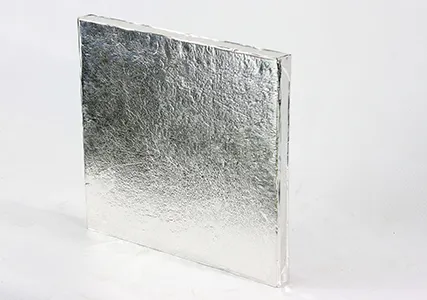
    Yunqing VIP Vacuum Insulation Panel: Finding a Balance Between Lightweight and Insulation

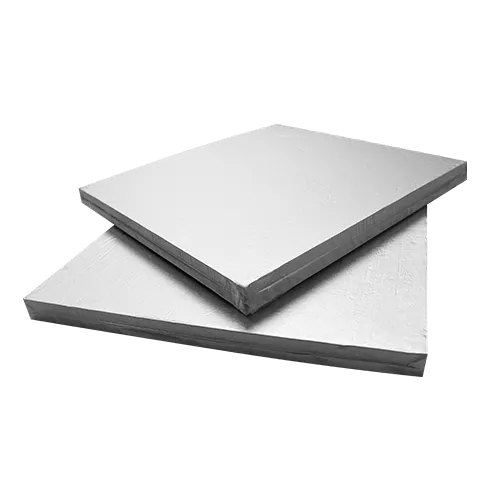
    SuperCooler Yunqing VIP vacuum insulation panels are designed to balance insulation performance, weight, and thickness.


    From the data, SuperCooler Yunqing VIP vacuum insulation panels have a thermal conductivity of 0.0055–0.0065 W/(m·K), lower than EPP foam; a core density of 42±5 kg/m³; and an area density at 20 mm of 1.3 kg/m², significantly lighter than traditional fiberglass VIP. For the same insulation target, Yunqing VIP vacuum insulation panels can be controlled at 15–20 mm, about 1/2 to 1/3 that of EPP foam.


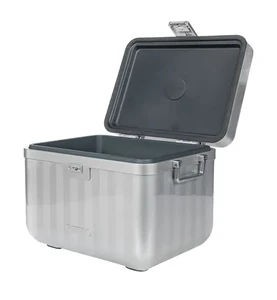
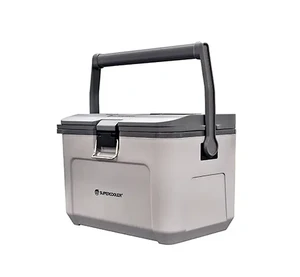
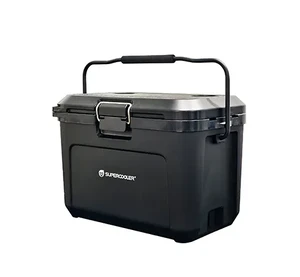
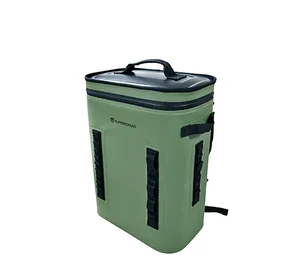
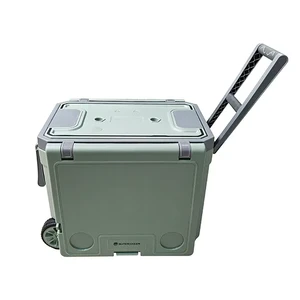
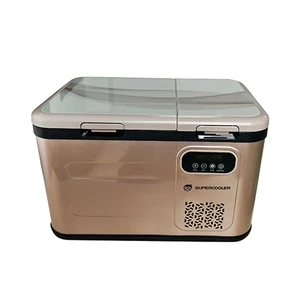
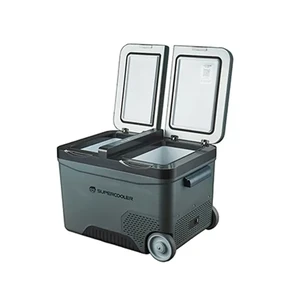
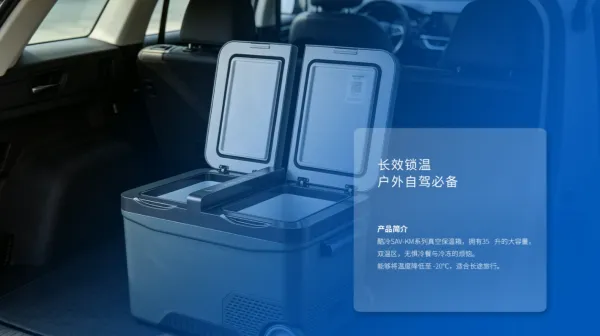
    Long-lasting temperature lock — essential for outdoor self-driving. Product introduction: SuperCooler SAV-KM series vacuum insulated box, with a large 35 L capacity, dual temperature zones, and no worries about freezing or refrigeration. It can lower temperatures to −20°C and is suitable for long-distance operation.

    For car refrigerators, the practical value of these material characteristics is:

    Thinner insulation layer makes it easier to increase internal usable capacity. In some structural designs, usable capacity can be increased by more than 30%.

    Total unit weight is easier to control, improving portability and carrying experience.

    Longer cold retention after power loss, suitable for camping, RV travel, long-distance transport, and other scenarios.

    Reduced cooling loss helps lower compressor operating frequency and overall unit energy consumption.


    Selection Recommendations

    Car refrigerators are not a single category, and different positioning requires different insulation materials.


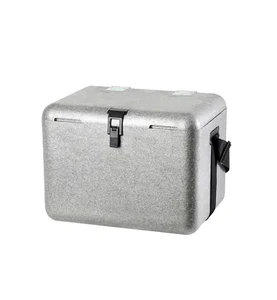
    EPP foam: suitable for low-end, affordable basic car insulated boxes and conventional fresh-keeping boxes with short-term preservation.


    Traditional fiberglass VIP: suitable for fixed-installation, high-end RV refrigerators and professional cold chain equipment that do not need to be moved frequently.


    Yunqing VIP vacuum insulation panels: more suitable for portable, lightweight car refrigerators, household self-driving models, and consumer car refrigerators undergoing lightweight, compact, and long-lasting cold retention upgrades.


    For users, the value of a car refrigerator is not just “it can cool,” but also holding more, being easy to move, and still holding up after power loss. For car refrigerator manufacturers, insulation material selection directly affects product structure, capacity, weight, energy consumption, and cost.


    how-does-an-ice-cream-cold-chain-transport-box-hold-steady-at-18-4.png

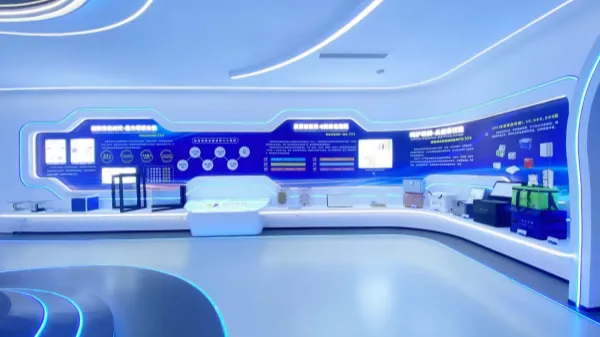
    SuperCooler showroom


    SuperCooler, backed by parent company Supertech’s 20 years of vacuum insulation technology expertise, goes beyond providing high-quality core materials to offer full-scenario temperature control solutions from selection to application.


    SuperCooler Yunqing VIP vacuum insulation panels provide a material-level approach for car refrigerators that balances lightweight design and insulation performance. If you are working on car refrigerator product definition, insulation structure design, or material selection, you are welcome to connect with us.


    References
    PREV: No information
    Products
    We use cookies to offer you a better browsing experience, analyze site traffic and personalize content. Part of the tracking is necessary to ensure SEO effectiveness,
    By using this site, you agree to our use of cookies. Visit our cookie policy to learn more.
    Reject Accept