Fujian Supertech Cold Chain Technology Co., Ltd.
EN
News

SuperCooler Lightweight Vacuum Insulation Panels: Lighter, Smarter, and More Cost-Effective Deep-Cold Shipping for -70°C Demands

Table of Content [Hide]

    Cell therapies, gene drugs, mRNA vaccines—these living, cutting-edge medicines are extremely temperature-sensitive. From –20°C frozen shipping to –70°C deep-cold transit, the entire temperature chain must stay within a tight tolerance. Any deviation can render an entire batch of active ingredients useless, wiping out millions in R&D investment.


    But traditional deep-cold shipping solutions are becoming the bottleneck that holds back the biopharma industry from faster, more affordable logistics.


    supercooler-lightweight-vacuum01.png


    The Triple Challenge of Deep-Cold Transport

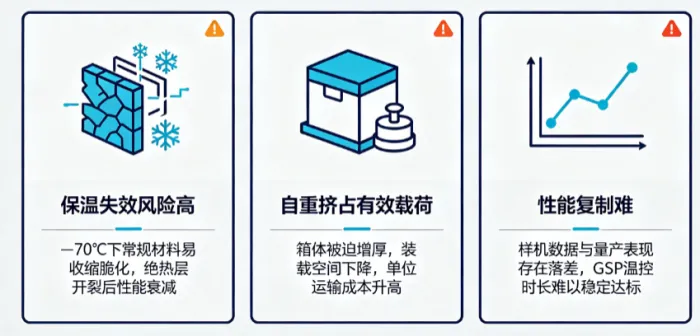
    Conventional deep-cold shipping faces three persistent problems:

    • High risk of insulation failure. Materials like polyurethane tend to shrink and become brittle at –70°C, causing cracks that drastically reduce thermal performance.

    • Deadweight eats into payload. To achieve the required hold time, box walls are thickened, reducing cargo capacity and driving up per-unit shipping costs.

    • Inconsistent performance. Prototype data often doesn’t match mass-production real-world results, making it difficult to reliably meet GSP temperature control durations.


    The root cause? A lack of a base material that maintains structural stability and thermal insulation across a wide temperature range, while also being lightweight and manufacturable with consistent quality.


    How SuperCooler Breaks the Ice

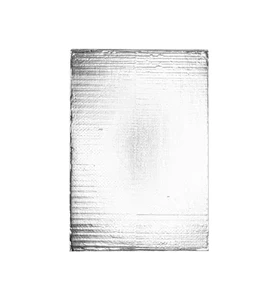
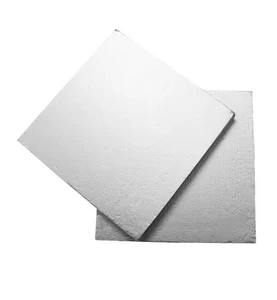
    To tackle these pain points, materials science offers a new ace: the SuperCooler Lightweight Vacuum Insulation Panel (VIP) from Supertech.


    Based on high-vacuum insulation technology with a novel lightweight core material, this next-gen high-efficiency insulation is designed to systematically resolve the common headaches of deep-cold shipping—thermal decay, excess weight, and performance variability—with thinner, lighter, and more stable performance.


    supercooler-lightweight-vacuum02.png


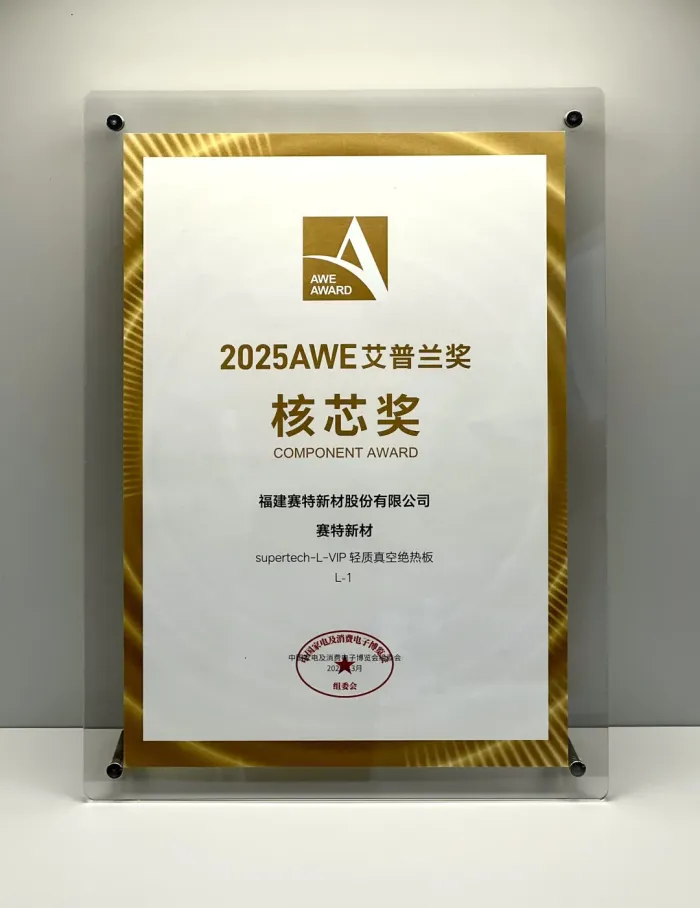
    Winner of the 2025 AWE Award for Core Technology, this product builds on Supertech’s 20 years of vacuum insulation expertise. Its innovative lightweight core delivers performance comparable to expensive fumed-silica VIPs, but at a significantly lower cost.


    Here’s how it works, broken down into four key advantages:


    1. Wide‑Temperature Structural Stability – Validated at –165°C by National Lab

    Conventional insulation materials commonly shrink, embrittle, and crack at –70°C, leading to thermal runaway. The SuperCooler VIP, however, has been independently tested by the National Glass Fiber Product Quality Supervision and Testing Center (Nanjing Guocai) at –165°C—far below actual shipping requirements. Results show:


    No shrinkage or deformation; dimensional change near zero.


    No loss of compressive strength.


    Even if the panel is accidentally punctured, expansion rate stays below 1%, with no long-term swelling or shrinking.


    This provides a substantial safety margin, drastically reducing the risk of in-transit failure due to low-temperature brittleness.


    2. Superior Thermal Performance

    SuperCooler achieves a thermal conductivity as low as 0.0055–0.0065 W/(m·K) —6 to 7 times more efficient than traditional polyurethane foam.


    MaterialThermal Conductivity W/(m·K)Relative Thermal Insulation Performance
    EPS Foam0.040Reference (1×)
    XPS Extruded Board0.0351.1×
    PU Polyurethane0.0231.7×
    Yunqing VIP (SuperCooler)0.0055‑0.0066‑7×


    For the same insulation duration:


    Conventional insulation thickness: 50–80 mm


    SuperCooler thickness: 25–35 mm


    That’s a 30%–50% reduction in wall thickness, increasing internal cargo volume by 10%–20%. Or, if you keep the same thickness, hold time extends to several times—even ten times—longer than traditional solutions.


    Same refrigerated truck, more cargo, longer range. Lower shipping cost per unit.


    3. Lightweight and Cost-Effective

    The new lightweight core material has a density only one-seventh that of traditional fiberglass cores, directly reducing the curb weight of insulated containers and refrigerated vehicles—cutting fuel consumption and improving payload efficiency.


    Even better, SuperCooler matches the thermal performance of fumed-silica VIPs, but with lower density and significantly reduced cost. It retains the core insulating advantages of fumed silica while being far lighter—making it ideal for weight-sensitive mobile transport applications. Both materials have their place, but SuperCooler is engineered specifically for the road.


    4. Eco‑Friendly and Safe

    SuperCooler meets REACH and RoHS compliance, having passed over 220 hazardous substance tests. It is also fire‑resistant and does not support combustion, ensuring high safety standards.


    supercooler-lightweight-vacuum04.png


    Three Key Use Cases – From Vaccines to CAR‑T

    Case 1: Vaccines and Biologics

    mRNA vaccines and gene therapies are typically stored at –80°C. Any temperature excursion during transport can ruin the entire shipment. Pharma cold-chain boxes integrated with SuperCooler VIPs can maintain effective temperature control at –70°C for over 72 hours, meeting long-haul cross-border shipping requirements.


    Case 2: Biological Samples and Cell Therapies

    Deep-cold transport of cells, tissues, proteins, and nucleic acids demands extreme temperature uniformity and shock resistance. When sample storage boxes are insulated with SuperCooler, temperature reliability is significantly enhanced—providing a zero‑tolerance safety net for CAR‑T cell products worth hundreds of thousands of dollars per dose.


    Case 3: Cold-Chain Equipment Upgrades

    For logistics operators, loading efficiency directly determines per-unit shipping costs. With SuperCooler-insulated boxes and refrigerated trucks, the thinner, lighter design increases cargo volume while reducing vehicle weight and fuel consumption.


    Lighter, Stronger, Farther – SuperCooler Redefines Deep-Cold Shipping

    SuperCooler Lightweight Vacuum Insulation Panels aren’t just about shaving off weight—they fundamentally reconstruct the reliability, economy, and reproducibility of deep-cold thermal insulation from the material level up. As biopharma supply chain security rises to strategic importance, SuperCooler isn’t just a technology upgrade; it’s the infrastructure you need to protect active ingredients, lower total costs, and expand cross-border operations.


    Get Your Custom Cold‑Chain Solution

    We offer sample testing and tailored thermal design to help you calculate the three bottom‑line benefits:


    Thinner walls → How many more boxes per truck?


    Lighter weight → How much fuel/airfreight cost saved per year?


    Stable temperature → How much cargo risk eliminated?


    Reply “Deep‑Cold Solution” and we’ll generate a customized data report for your specific use case.


    Supertech – innovating insulation for the life sciences supply chain.


    References
    PREV: No information
    Products
    We use cookies to offer you a better browsing experience, analyze site traffic and personalize content. Part of the tracking is necessary to ensure SEO effectiveness,
    By using this site, you agree to our use of cookies. Visit our cookie policy to learn more.
    Reject Accept