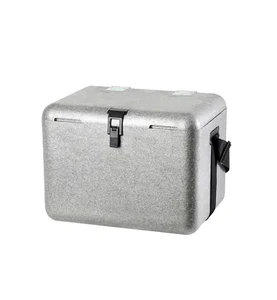
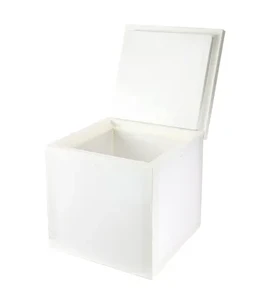
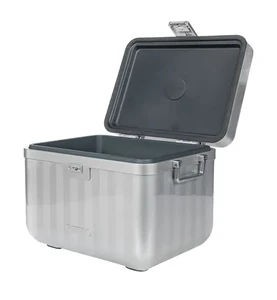
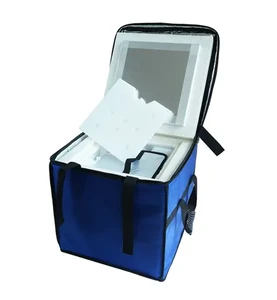
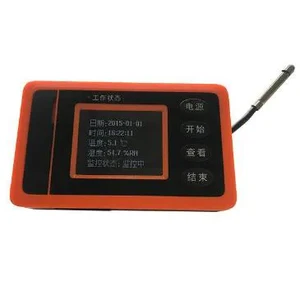
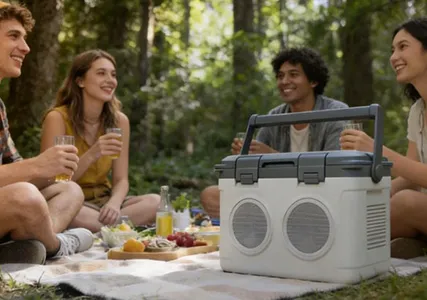
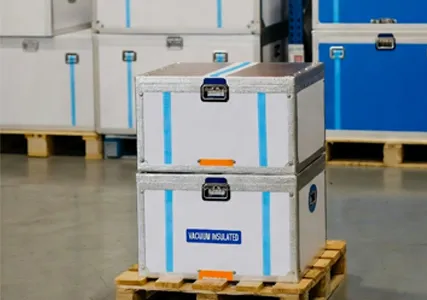
Frozen goods demand a deep chill of 0°F (-18°C). Fresh milk needs a steady 32–39°F (0–4°C) refrigerated zone. Fresh produce relies on the gentle care of 41–54°F (5–12°C). Three strict temperature requirements—all trapped inside the same reefer truck. Split them across three trucks, and your transport costs double instantly. Mix them together in one load, and spoilage rates can hit 35% by the time they arrive. Split delivery? Too expensive. Mixed loading? Too much loss. This has been the unsolvable "choice" plaguing the fresh-food cold chain for years.
Is there really no win-win solution? The answer is simple: one mobile insulated roll cage makes "multiple temperatures, one vehicle" a reality—and redefines the value of a single delivery run.
The Cold-Chain "Impossible Triangle"
In the high-stakes world of fresh-food delivery, the trade-off between cost and quality never stops.We sum up the dilemma of traditional cold-chain as an "Impossible Triangle":
Single Temperature Zone — Cross-Contamination Means Write-Off
Even with multi-temperature reefer units, air-duct designs can't create a physical barrier inside the truck. When 0°F (-18°C) frozen goods share space with 39°F (4°C) fresh milk, "temperature conflict" is inevitable. The result: frozen goods develop frost, and milk shelf life shrinks dramatically.
One fresh-food warehouse manager ran the numbers—mixed-load spoilage can hit 35%. The money saved on shipping never makes up for the value of the lost inventory.
Power-Dependent — Energy Costs Eat Profits
Diesel reefer units come with high fuel consumption, constant noise, and heavy maintenance burdens. In last-mile delivery, frequent stops and repeated door openings force the unit to run overtime just to recover lost cold air—sending operating costs through the roof.
Even worse: during loading/unloading with the engine off, the cooling stops. The cold chain breaks—often in just a few minutes. All that careful temperature control over hundreds of miles can fall apart in the last few minutes of the journey.
Cumbersome Handling — The Chain Breaks in the Final Meter
From cold storage to reefer truck to in-store cooler—every handoff exposes goods to ambient temperature. That doesn't just mean hiring two extra loaders; it means wasting hundreds of miles of cold-chain effort in the final few dozen feet.
Quality slips away with every single move.
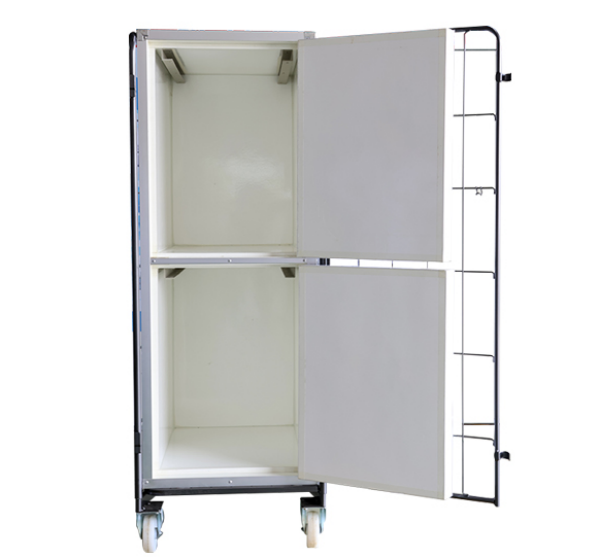
How One "Mobile Insulated Roll Cage" Enables Multi-Temperature One-Vehicle Delivery
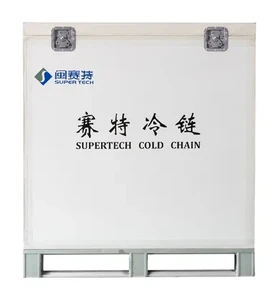
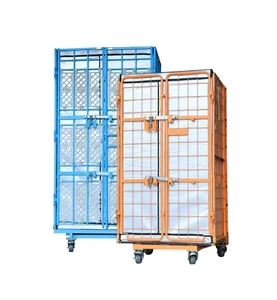
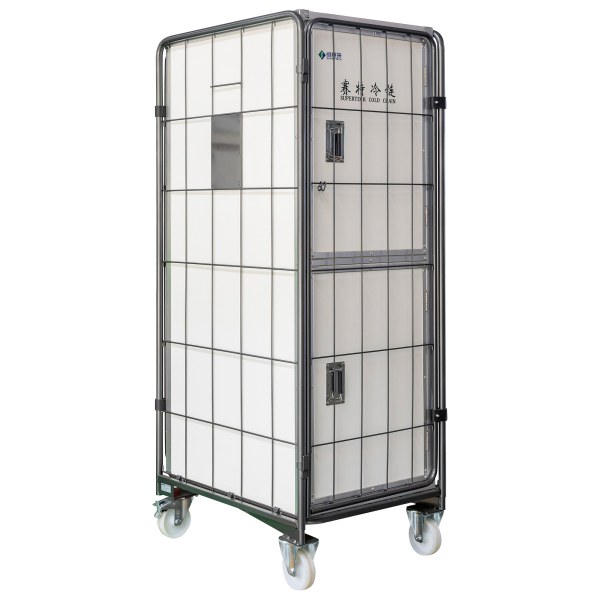
To solve these pain points, Supertech Cold Chain developed the SuperCooler Mobile Insulated Roll Cage. This isn't just a transport container—it's a "mobile micro-cold-storage" solution.
Independent Zoned Temperature Control — No More Cross-Contamination
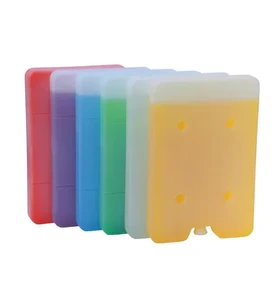
Using partitioned insulated box compartments, physical thermal barriers are built right into the vehicle. Delivery staff place the corresponding phase-change plates in each zone (refrigerated zone at 36–46°F / 2–8°C, frozen zone at 0°F / -18°C).
This design gives a single mobile roll cage both refrigerated and frozen capabilities—eliminating cross-contamination at the physical level.
Passive Cold Storage — No External Power Required
No external power connection needed. No diesel reefer unit required. The roll cage is fully "charged" with cold energy during loading at the cold storage facility.
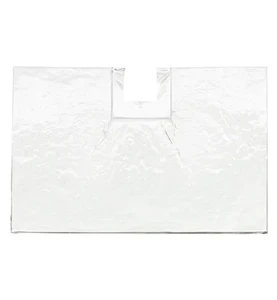
Leveraging parent company Supertech's core VIP (Vacuum Insulation Panel) technology—thermal conductivity below 0.002 W/(m·K)—combined with a high-strength galvanized steel frame, the roll cage delivers 24–96 hours (customizable) of stable temperature control. Zero fuel consumption. Zero electrical dependency. Zero maintenance costs.
A "Mobile Cold Storage" That Keeps the Chain Unbroken
The mobile insulated roll cage is positioned as a "mobile" insulated turnover container. Throughout the entire cold-chain process, it acts as a portable cold-storage unit:
Origin loading: Goods are loaded directly into the roll cage inside the cold storage facility.
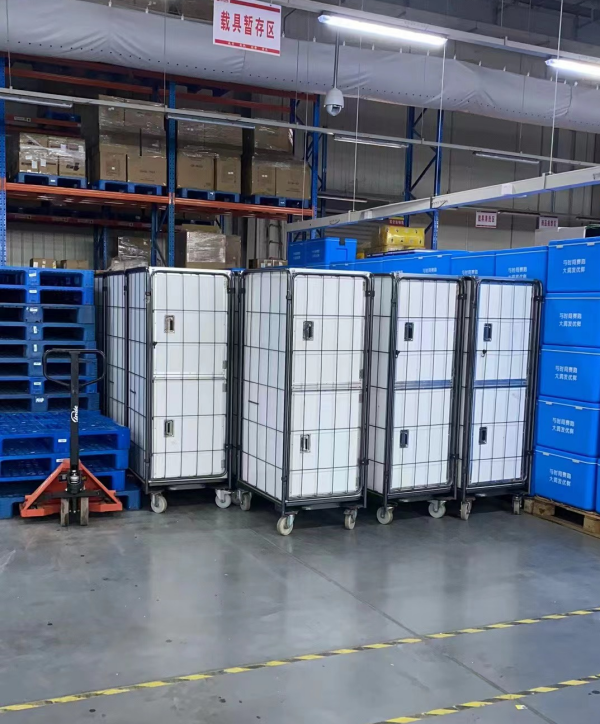
Seamless transport: The roll cage is pushed directly into a standard dry van via a liftgate—no secondary cargo transfer.
Final delivery: At the destination, it's rolled straight into the store or micro-fulfillment center.
Goods never leave the temperature-controlled environment. Handling steps are reduced. Labor costs drop. Temperature fluctuation risk decreases significantly.
Crunch the Numbers: What You Save Is Your Profit
Supertech Cold Chain provides not just an insulated roll cage—but a complete cost-reduction and efficiency-boosting solution. The core value is clear:
Fewer vehicles: Multiple temperatures in one vehicle—higher utilization, lower empty-run rates.
Lower spoilage: End-to-end unbroken cold chain—dramatically reduced product loss.
Reduced costs: Passive cold storage—no fuel, no power, no unit maintenance.
Higher efficiency: Whole-cage loading/unloading—faster store handoffs.
Versatile application: One investment, multiple use cases.
Beyond Fresh Food: A "Cold-Chain All-Rounder" for Every Scenario
Chain Restaurants: Central kitchen → store—frozen meat and fresh produce arrive together, ensuring ingredient safety.
Fresh-Food E-Commerce: Micro-fulfillment center → pickup point—solving the "last 100 meters" freshness challenge.
Medical & Pharmaceutical: Vaccines, blood products, and biological samples—compliant, temperature-stable transport.
Supermarkets & Convenience Stores: Daily restocking of fresh milk, prepared meals, and chilled beverages.
Redefining "The Value of One Delivery Run"
Supertech Cold Chain, leveraging parent company Supertech's core VIP vacuum insulation panel technology, is dedicated to providing systematic, energy-efficient insulation solutions for the pharmaceutical, fresh-food, and foodservice industries.
The SuperCooler insulated roll cage is more than just an insulated turnover container—it's the key to unlocking a new era of "multiple temperatures, one vehicle, shared delivery."
If you're struggling with high costs and heavy losses in multi-temperature-zone delivery, let's work together to redefine the value of one delivery run.
FAQ
Q1: How long can the insulated roll cage maintain temperature?
A: Temperature retention (24 to 96 hours) is customizable based on client requirements—depending on insulation thickness, the number of PCM plates configured, and ambient temperature.
Q2: Can this unpowered insulated roll cage really maintain 0°F (-18°C) freezing temperatures?
A: Absolutely. The SuperCooler insulated roll cage uses -18°C PCM plates combined with VIP vacuum insulation panel performance to maintain a stable 0°F (-18°C) internal temperature for dozens of hours—entirely unplugged—meeting the demands of long-distance cold-chain delivery.
Q3: How are temperature zones divided and controlled inside the roll cage? Will there be cross-contamination?
A: The SuperCooler insulated roll cage features a physical partitioned design with independent compartments, paired with a dual-door structure. Each zone is loaded with PCM plates at different phase-change temperatures—for example, 36–46°F (2–8°C) plates for the refrigerated zone and 0°F (-18°C) plates for the frozen zone. Physical separation ensures each zone operates independently, with zero cross-contamination.