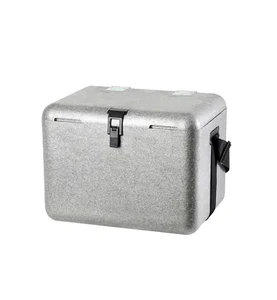
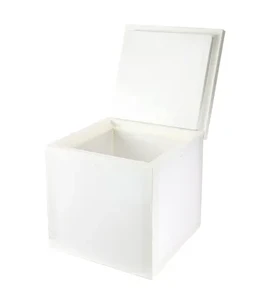
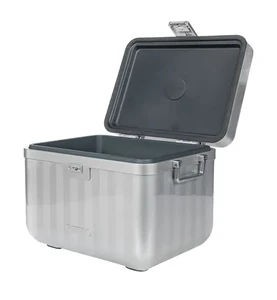
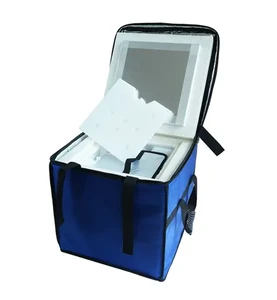
In the past, people mostly thought of insulated boxes as small foam boxes and single-use insulated packaging: suitable for short-distance, small-batch transport, but with high loss, no reusability, and unstable temperature control.
Today, with the standardization of pharmaceutical cold chains, the refinement of fresh food cold chains, and the normalization of long-distance logistics, pallet insulated boxes are moving from “optional accessories” to must-have standards.
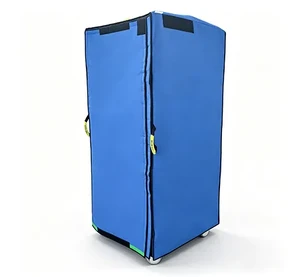
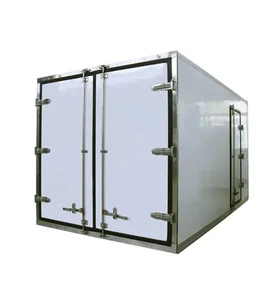
The SuperCooler detachable pallet insulated box, with coolant at 35°C, provides refrigerated/frozen insulation for more than 96 hours. Insulation duration can be customized from 4 to 8 days, making it suitable for long-distance linehaul, cross-border air and sea freight, and multi-leg transfers.
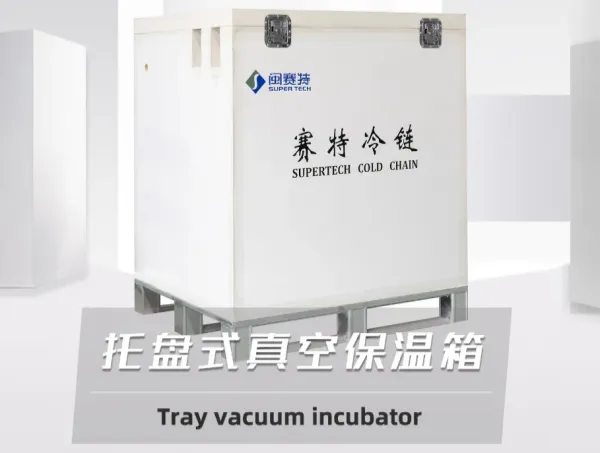
What Is a Pallet Insulated Box?
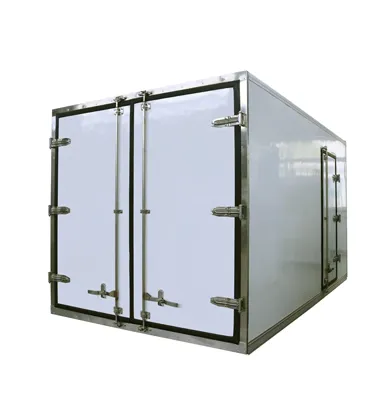
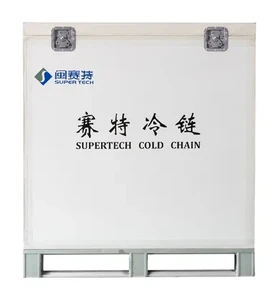
A pallet insulated box, also called a pallet-type passive insulated box, is cold chain equipment that uses a standard pallet as its base, VIP (vacuum insulation panel) + PCM as its temperature control core, and supports full-pallet loading/unloading and recycling.
Simply put, it is not a simple enlarged version of a traditional foam box. It is a full-pallet temperature-controlled container designed for linehaul transport and integrated cross-regional distribution and warehousing.
It mainly solves three major pain points of traditional cold chains:
· High investment in refrigerated trucks;
· Single-use foam packaging is not environmentally friendly;
· High labor costs for loading and unloading.
· It is especially suitable for pharmaceuticals, fresh products, cross-border long-distance transport, multi-leg transfers, and other scenarios.
Why Is the Market Exploding? RMB 4.83 Billion, 12.6% Growth
In 2025, China’s pallet insulated box market reached RMB 4.83 billion, up 12.6% year over year, far exceeding the average growth rate of 7.8% for the insulated box industry.
It has become a core growth engine for cold chain equipment, driving the industry from “general insulation” toward “specialized, intelligent, and fully coordinated temperature control.”
Three major trends are driving it toward becoming a must-have:
1. Standardization of pharmaceutical cold chains
The transport of vaccines, biologics, blood products, clinical samples, and other materials has increasingly high requirements for stable temperature zones, temperature records, and full traceability. Single-use insulated boxes struggle to meet large-scale and reusable needs.
2. Refinement of fresh food cold chains
Meat, seafood, fruits and vegetables, dairy, prepared meals, and other products have increasing demand for refrigerated, frozen, and constant-temperature multi-zone distribution. Traditional insulated boxes have unstable temperature control and high cargo damage risk.
3. Normalization of long-distance logistics
Cross-regional linehaul, central warehouse to forward warehouse, and production area to sales area are continuously extending transport radii. Ordinary insulated boxes struggle to cover scenarios over 48 hours, while large pallet insulated boxes are better suited for ultra-long insulation and nationwide linehaul logistics.
This is the underlying logic behind pallet insulated boxes moving from “optional accessories” to “must-have standards.”
Why Are More and More Cold Chain Logistics Companies Choosing Pallet Insulated Boxes?
It is not “enlarging a small insulated box.” It turns a standard pallet into a mobile temperature control unit.
1. Faster loading, unloading, and turnover: compatible with standard pallets, full pallets loaded directly
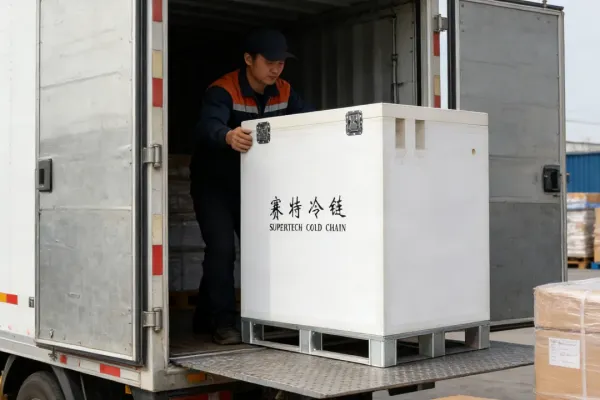
The SuperCooler pallet insulated box comes with a standard pallet base. Full pallets of goods can be loaded into the box by forklift, reducing temperature fluctuations and cargo damage caused by manual handling and box switching. It is compatible with automated storage and retrieval systems, AGVs, and assembly line operations.
Single-box volume is 500–1,500 L, suitable for full-pallet batch shipments, regional distribution, and full-truckload consolidation.
2. Lower transport costs: passive long-duration insulation, reducing dependence on refrigerated trucks
The SuperCooler pallet insulated box uses VIP + PCM passive temperature control. In a 35°C environment, it can maintain 2–8°C or -15 to -25°C inside the box for more than 96 hours. Insulation duration can be customized from 48 to 200 hours.
It can be shipped directly using ordinary trucks, reducing costs for refrigerated truck procurement, refrigeration unit maintenance, fuel, and insurance.
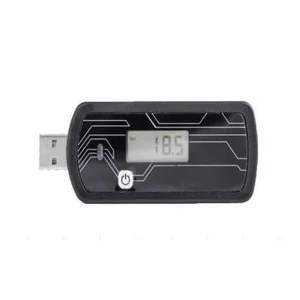
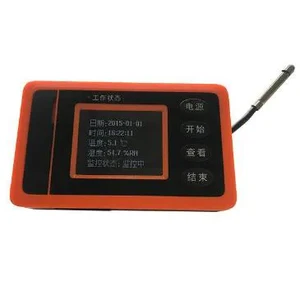
With a temperature data logger, it provides full traceability. Fresh product loss can be reduced to below 2%, meeting pharmaceutical GSP compliance requirements.
3. Lighter recycling and warehousing: modular and foldable, reducing empty-box return costs
Traditional one-piece insulated boxes are bulky, cumbersome to recycle, and take up large storage space.
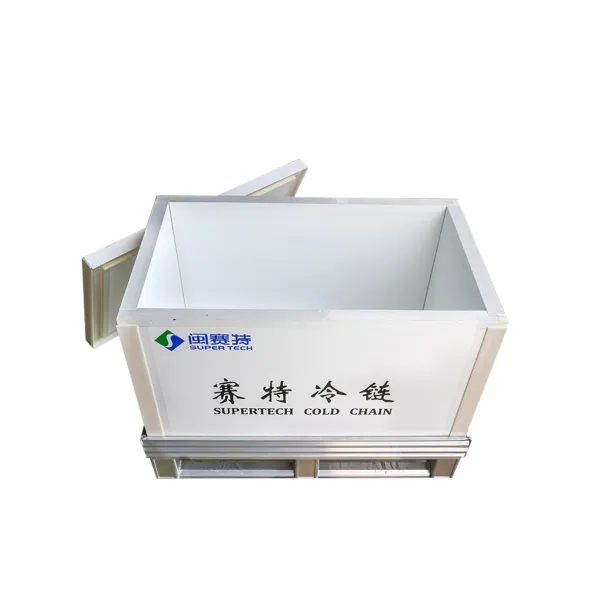
After the SuperCooler detachable pallet insulated box is disassembled and folded, its volume is reduced by two-thirds compared with traditional insulated boxes, greatly reducing return transport, warehousing, and recycling costs.
4. More flexible multi-temperature zones: one box body, switch by changing coolant
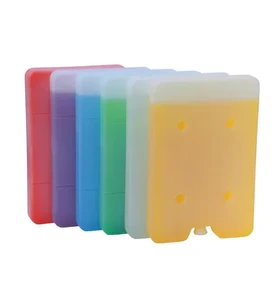
One box body can switch between the following by changing the phase change coolant:
· 0–8°C pharmaceutical refrigeration;
· 0–5°C fresh products;
· -20°C frozen food.
· It adapts to the multi-temperature-layer distribution needs of e-commerce forward warehouses and central warehouses under dual-network coordination.
For cold chain logistics companies, its value is: less handling, less cargo damage, fewer refrigerated trucks, less warehousing, and more scenarios.
Technology Foundation: How Are These Values Achieved?
It is not simply a “pallet + insulation layer.” It is a systematic combination of materials, structure, temperature control, and sensing.
1. VIP vacuum insulation panels: blocking heat exchange
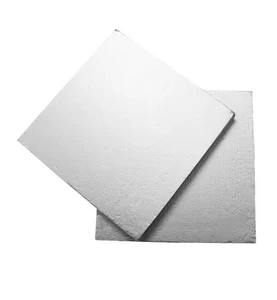
The inner and outer layers use impact-resistant thermoplastic materials that are wear-resistant and corrosion-resistant. The insulation layer uses polyurethane composite vacuum insulation panels with thermal conductivity as low as 0.002 W/(m·K), effectively reducing heat exchange.
2. PCM phase change energy storage: enabling passive temperature control
No vehicle refrigeration unit and no continuous power supply are needed. It relies on PCM coolant to maintain constant temperature.
It is suitable for remote transport scenarios with inadequate infrastructure, no external power, and limited manual intervention, and it also supports flexible switching among multiple temperature zones.
3. Modular splicing structure: quick assembly and disassembly, reusable
The SuperCooler pallet insulated box uses a “pallet + 6 PUV insulation panels + straps” splicing structure. It is easy to assemble and disassemble. After folding, its volume is reduced by two-thirds, making it easy to recycle, store, and reuse.
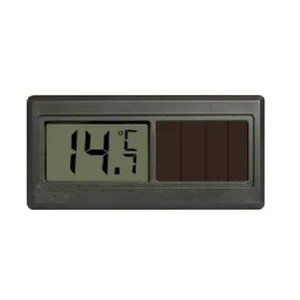
4. Smart temperature sensing module: full traceability
It monitors the temperature inside the box in real time and supports data logging and traceability, meeting high-requirement cold chain scenarios such as pharmaceuticals, vaccines, and fresh products.
It achieves less labor, lower cargo damage, fewer refrigerated trucks, and lighter return/recycling and warehousing.
Who Uses Pallet Insulated Boxes?
1. Pharmaceutical cold chain
Suitable for the transport of vaccines, biologics, blood products, clinical samples, and other materials. With a temperature data logger, it can meet pharmaceutical cold chain standardization requirements.
2. Fresh food cold chain
Suitable for meat, seafood, fruits and vegetables, dairy, and other products. Full-pallet loading and unloading reduces repeated box opening and lowers cargo damage.
3. Prepared meals and foodservice supply chain
From prepared meal factories to central kitchens, stores, and forward warehouses, refrigerated or frozen transport is required. Detachable pallet insulated boxes can be folded and recycled, reducing empty-box return costs.
4. Supermarkets and e-commerce warehousing/distribution
Multi-temperature-zone distribution from supermarket central warehouses and e-commerce central warehouses to stores and forward warehouses must handle freezing, refrigeration, and constant temperature.
The SuperCooler detachable pallet insulated box is supplied directly from the source manufacturer, is detachable, foldable, and recyclable, and supports 48–200 hours of multi-temperature-zone insulation (temperature zone, duration, and dimensions are all customizable). It covers full cold chain scenarios such as pharmaceuticals, fresh products, prepared meals, and supermarkets.
The cold chain is moving from “can deliver” to “delivers accurately, economically, and compliantly.” Pallet insulated boxes are no longer just packaging—they are cold chain infrastructure.
Choosing the right recyclable, long-duration, highly adaptable pallet insulated box means planning ahead for cost, efficiency, and compliance.
SuperCooler, backed by parent company Supertech’s 20 years of vacuum insulation technology, provides you with one-stop systematic temperature control solutions.