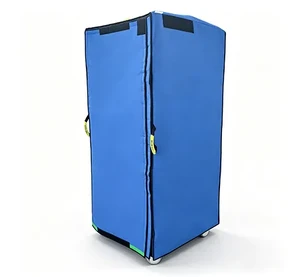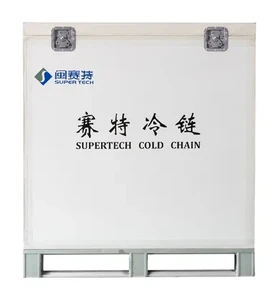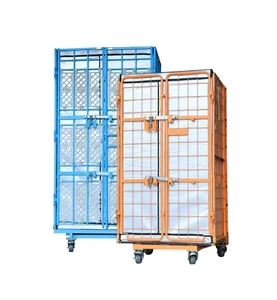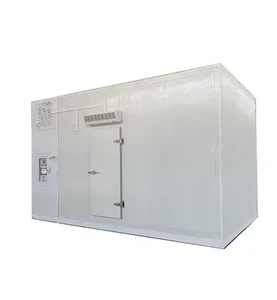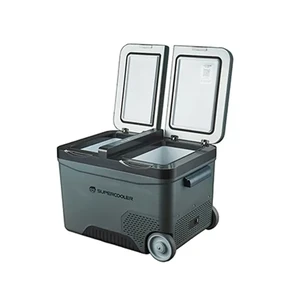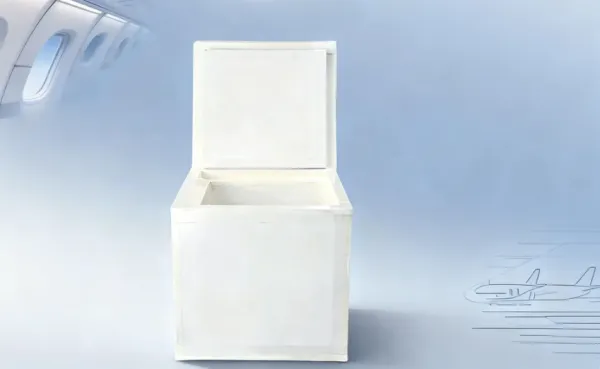

QYResearch forecasts that the global air temperature-controlled cargo box market will reach $580 million by 2031. Demand growth is driven by biopharmaceutical and high-quality food transport, and air transport boxes need to balance insulation, lightweight design, and cost. The SuperCooler CloudLight VIP vacuum insulation panel offers insulation performance comparable to fumed silica VIP, with lower density and better cost, providing a highly cost-effective insulation solution.

The global air temperature-controlled cargo box market is expanding rapidly.
A QYResearch report shows that by 2031, the market size is expected to reach $580 million, with a compound annual growth rate of 8.7%.
Demand for transporting vaccines, plasma, reagents, and high-quality fresh products continues to rise, making air temperature-controlled boxes a key part of the cold chain.
But problems come with it:
Air transport boxes need insulation and also need to be light;
They need to be light, and also cost-controlled.
Traditional insulation materials find it hard to achieve all at once.
The SuperCooler CloudLight VIP vacuum insulation panel was created precisely to solve this pain point.
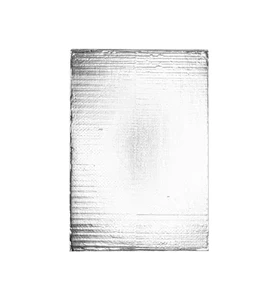
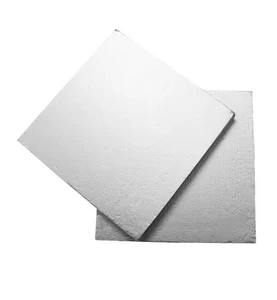
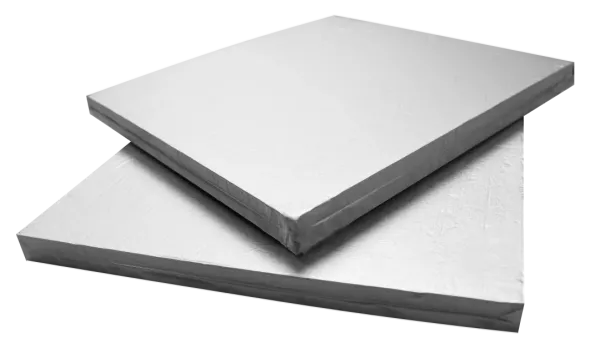
The CloudLight VIP vacuum insulation panel offers insulation performance comparable to fumed silica vacuum insulation panels, and with extremely low density (lighter) and cost advantages, it provides a highly cost-effective insulation solution.

In high-end cold chain, portable refrigeration, and precision equipment, “weight reduction” and “insulation” are often a contradiction.
Traditional insulation materials are either thick and bulky, taking up valuable space, or their insulation performance degrades quickly and cannot handle long-distance transport challenges.
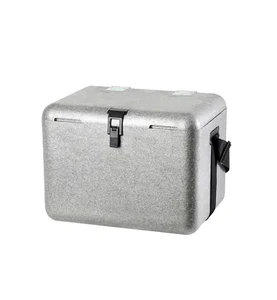
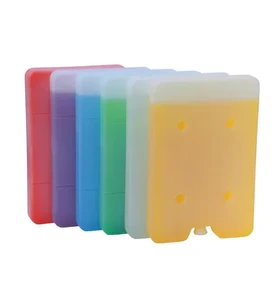
Ordinary lightweight insulated boxes, such as foam boxes, are affordable and easy to carry, but have obvious shortcomings in insulation performance. For international freight that often takes dozens of hours, foam boxes simply cannot guarantee stable and controllable temperature throughout the journey.
A true aviation-grade insulated box must overcome three major challenges at the same time:
Lightweighting
High insulation
Low cost
The SuperCooler CloudLight VIP vacuum insulation panel from SuperCooler was created precisely to solve this pain point.
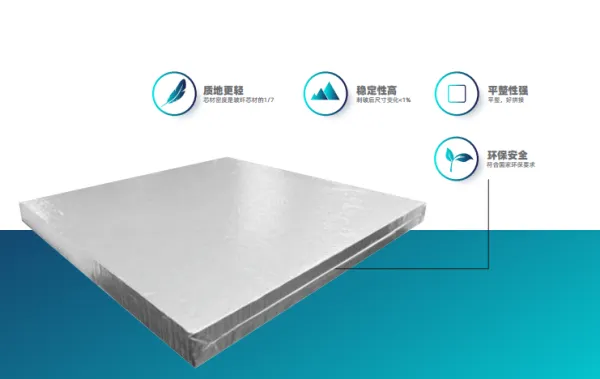
The most immediate impression of this SuperCooler CloudLight VIP vacuum insulation panel is how “light” it is.
Highlight 1: Lightweight
Core material density is only 42 ± 5 kg/m³
It is lighter than fumed silica VIP vacuum insulation panels (fumed silica VIP core density is 170 kg/m³; it is about 1/7 that of traditional fiberglass core VIP (280–330 kg/m³), significantly reducing overall box weight.
Application advantages: suitable for portable devices, aerospace, logistics, and many other scenarios.
Highlight 2: Thermal Barrier
Light does not mean poor insulation.
Let the data speak:
Thermal conductivity: 0.0055–0.0065 W/(m·K)
About 1/6–1/7 that of EPS (0.038 W/(m·K))
About 1/4 that of rigid PU foam (0.024 W/(m·K))
Far lower than conventional polyurethane and EPS/XPS
Extremely low thermal conductivity effectively blocks heat intrusion and ensures long-term stable temperature inside the box.
When a density of 42 kg/m³ meets a thermal conductivity of 5.5 mW, this is not just the arrival of a new product—it is an important step for insulation materials toward “high-performance lightweighting.”

Under the same insulation performance, the changes brought by the SuperCooler CloudLight VIP vacuum insulation panel:
Insulation layer thickness can be reduced from 45 mm with EPS to 15–20 mm
External box volume reduced by about 40%
Single box weight reduced by about 6,000 grams
Converted at cold chain dedicated line freight rates, a single flight saves about $72 in freight
For 100 shipments per year, savings of about $7,200
This does not even include the volumetric weight savings, increased internal volume, and labor efficiency improvements brought by thinner walls.
In other words, the CloudLight VIP vacuum insulation panel is not just an insulation board—it is a freight-saving solution that continues to generate returns.
For air insulated box manufacturers and cold chain operators, this means:
Same route, lower freight per trip
Same box, larger internal volume
Same insulation requirements, thinner walls
Same number of shipments, better annual cost
Under the same insulation performance
Lighter box, thinner insulation layer, smaller external volume, larger internal volume, lower freight per trip, and better annual cost.
This is the real value that lightweight vacuum insulation panels bring to air transport boxes.
SuperCooler, backed by its parent company Supertech’s 20 years of vacuum insulation technology accumulation, not only provides high-quality core materials, but is also committed to providing you with full-scenario temperature control solutions from selection to application.
Welcome to contact the SuperCooler technical team to obtain a customized cost calculation and sample solution based on your route, box specifications, and temperature control requirements.
Make air transport boxes lighter, thinner, and lower in cost—starting with one CloudLight VIP vacuum insulation panel.