Fujian Supertech Cold Chain Technology Co., Ltd.
EN
News

35°C, 80% Humidity, 12 Hours: How Does an Ice Cream Cold Chain Transport Box Hold Steady at -18°C?

Table of Content [Hide]

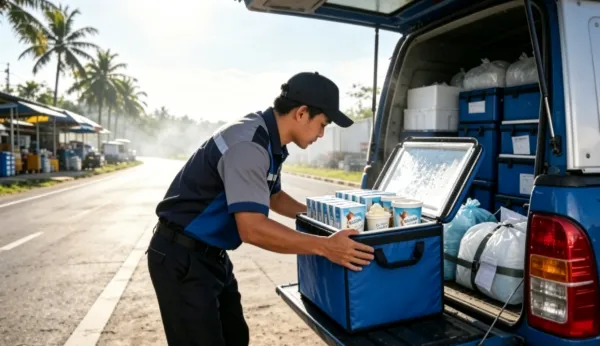
    35°C heat, 80% humidity, and 12-hour delivery—ice cream must stay at -18°C the entire time. This is daily life on a city distribution route from Bangkok to Chonburi, Thailand.


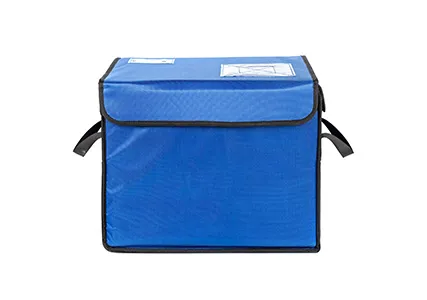
    Southeast Asia stays at 32–38°C year-round. High humidity, direct sun, bumps, and impacts constantly test cold chain transport boxes. Ordinary foam boxes struggle to reliably hold -18°C for more than 12 hours at 35°C, and their thick walls and heavy weight do not meet lightweight requirements. The SuperCooler ice cream cold chain transport box uses a “VIP + PCM” passive constant-temperature solution: no power supply required, no cold chain break, and stable -18°C temperature zone for more than 12 hours. It is suitable for all climate regions and, under proper use, maintains normal status without active intervention.


    At the same volume, it is thinner and lighter, leaving more payload capacity for goods. Why does a thinner wall keep cold better? How should you choose an ice cream transport box? Below, from materials and structure to a selection checklist, we explain it all at once.


    Why Is Ice Cream Cold Chain Transport So Challenging in Southeast Asia?

    Southeast Asia is hot year-round, with high humidity during the monsoon season. Frozen foods such as ice cream are extremely sensitive to temperature. End-to-end cold chain transport must remain continuous and stable, with no breaks. Cross-border transport combined with high-frequency city distribution means many stops and door openings, requiring cold chain transport boxes to maintain -18°C for more than 12 hours at 35°C. Some routes even need 24 hours or more. Traditional insulated boxes absorb moisture easily; after moisture absorption, insulation performance drops sharply, making them hard to meet repeated turnover needs.


    Five Hard Criteria for Choosing an Ice Cream Transport Box

    Temperature zone. It must clearly support -18°C and below. Do not choose a box based on ordinary refrigerated 0–4°C standards.


    Duration. Use 12 hours as the baseline, and prioritize food cold chain insulated boxes with 24-hour capability.


    Weight. At the same volume, the lighter the box, the higher the loading rate and the lower the freight cost.


    Reusability. It must withstand impact, be cleanable, and be reusable—not disposable.


    Safety. The cold source configuration must comply with regulations. Road and air transport requirements differ, so confirm them in advance.


    How to Choose Insulation for an Ice Cream Transport Box? VIP Vacuum Insulation Panels Are Key

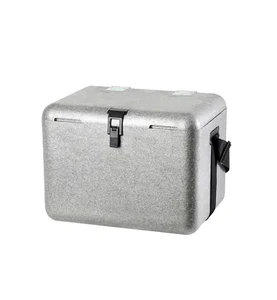
    Traditional insulated boxes mostly use EPS foam or PU foam. To achieve more than 12 hours of insulation, they often require very thick walls, making the box bulky and freight expensive.


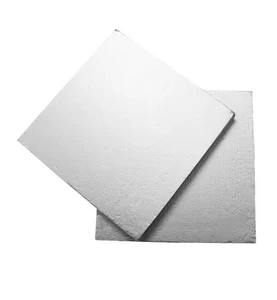
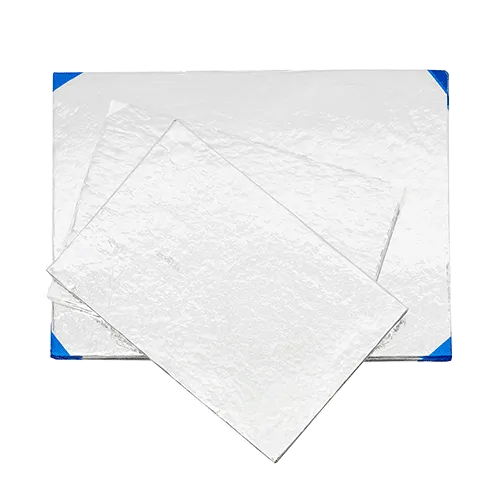
    Supertech VIP vacuum insulation panels have a thermal conductivity as low as 0.002 W/(m·K), with insulation performance 8 times that of EPS foam. While meeting the same 12-hour insulation duration, VIP vacuum insulation panel insulation thickness can be reduced to 10–20 mm:

    Insulation thickness reduced by about 60%–75%

    Box tare weight reduced by 30%–50%

    Effective internal loading capacity increased by 20%–40%


    Lower logistics freight per box; the same vehicle can carry more goods, greatly improving cold chain transport economics.


    Note: The above data are calculated values based on comparison of boxes with the same specifications. Actual results are affected by box structure, sealing, ambient temperature, and loaded contents.


    Why does a thinner ice cream transport box wall keep cold better?


    Because insulation efficiency is different. Ordinary foam and PU foam rely on the material’s own low thermal conductivity for insulation; to increase insulation duration, you can only add thickness. VIP vacuum insulation panels use a high-barrier encapsulation film + porous core material + vacuum to reduce air convection and gas heat conduction to extremely low levels, achieving higher thermal resistance with a thinner insulation layer.


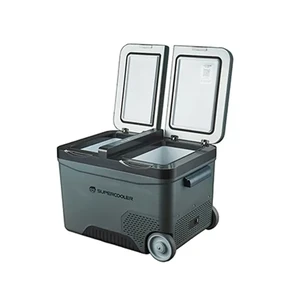
    SuperCooler VIP vacuum insulated boxes are suitable for city distribution and high-frequency short-distance delivery. In a 35°C environment, paired with coolant, at a constant temperature of -18°C, they can stably provide more than 12 hours of insulation, and even up to 24–120 hours. Insulation duration and temperature zone can be customized. The box is reusable and suitable for ice cream transport boxes, food cold chain insulated boxes, and other scenarios.


    VIP + PCM: Passive Constant Temperature, No Power Supply, No Cold Chain Break


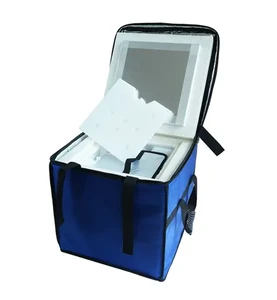
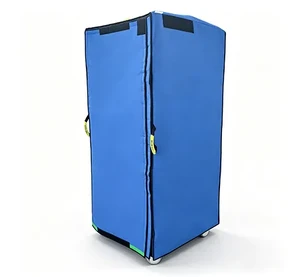
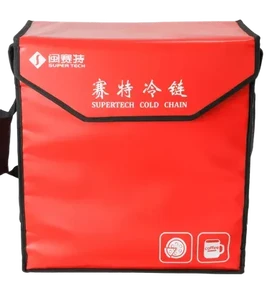
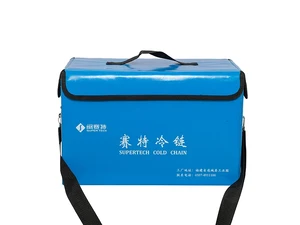
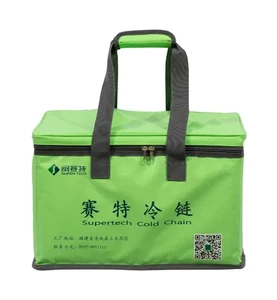
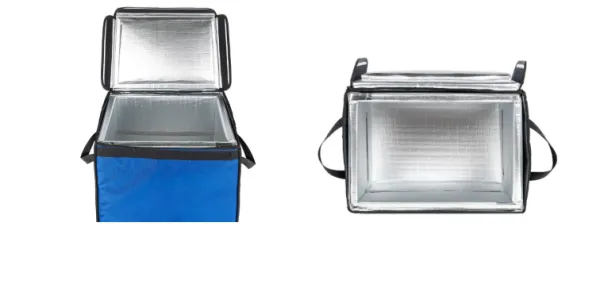
    The SuperCooler ice cream cold chain transport box uses high-strength Oxford fabric on the exterior. It is wear-resistant and tear-resistant, built to withstand repeated use. It adopts a “VIP + PCM” passive constant-temperature solution:

    Inside, it uses Supertech vacuum insulation panels with thermal conductivity ≤0.002 W/(m·K), greatly reducing external heat transfer.

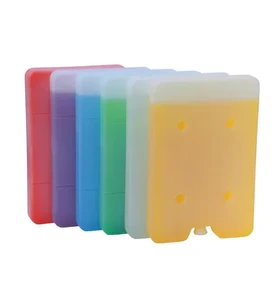
    PCM phase change cold storage material releases cooling at the appropriate temperature zone, helping maintain the internal temperature in the -18°C zone.


    Whether for -18°C deep freezing or 60°C high-temperature hot chain, it can handle both, with 12–24 hours of precise endurance (insulation duration and temperature zone customizable). Suitable for all climate regions, it can maintain normal status without active intervention.


    It does not rely on vehicle power or active refrigeration equipment. It is suitable for cross-border transport, city distribution, and high-frequency door-opening turnover scenarios. For ice cream, this means from warehouse to store, from linehaul to last mile, one less power failure risk and one more layer of temperature protection.


    Ice Cream Transport Box Purchasing Selection Checklist

    Check temperature zone: Does it clearly support -18°C?


    Check duration: Can it stably provide more than 12 hours at 35°C? Is there a 24-hour-plus option?


    Check material: Does it use a VIP vacuum insulation panel composite structure, rather than single-layer EPS?


    Check structure: Is the outer shell EPP/PU? How are impact and compression resistance?


    Check cold source: Is PCM phase change cold storage material configured? Is dry ice only a supplement?


    Check weight: Compare weight at the same volume and calculate the freight cost.


    Check reuse: Can it be folded, cleaned, and repaired? Does it support repeated use?


    Check service: Can solutions be customized by route, duration, and box volume?


    For ice cream transport boxes, the core is never just “insulation”—it is stability, lightweight design, and reusability. Choosing the right cold chain transport box protects ice cream quality and protects the cost of every order.


    SuperCooler, backed by Supertech’s 20 years of vacuum insulation technology, focuses on the cold chain insulated box field and provides systematic, customized temperature control solutions for pharmaceuticals, fresh food, catering, outdoor, and cold chain logistics. We have 18 patented technologies, and cumulative insulated box shipments exceed 400,000 units, with business covering more than 20 countries worldwide.


    To learn more about cold chain scenario solutions, leave a message with: route + duration + box volume. We can provide selection recommendations.


    References
    Products
    We use cookies to offer you a better browsing experience, analyze site traffic and personalize content. Part of the tracking is necessary to ensure SEO effectiveness,
    By using this site, you agree to our use of cookies. Visit our cookie policy to learn more.
    Reject Accept